Blog
Arboleaf Accuracy: How Precise Plant Monitoring Transforms Your Garden Success

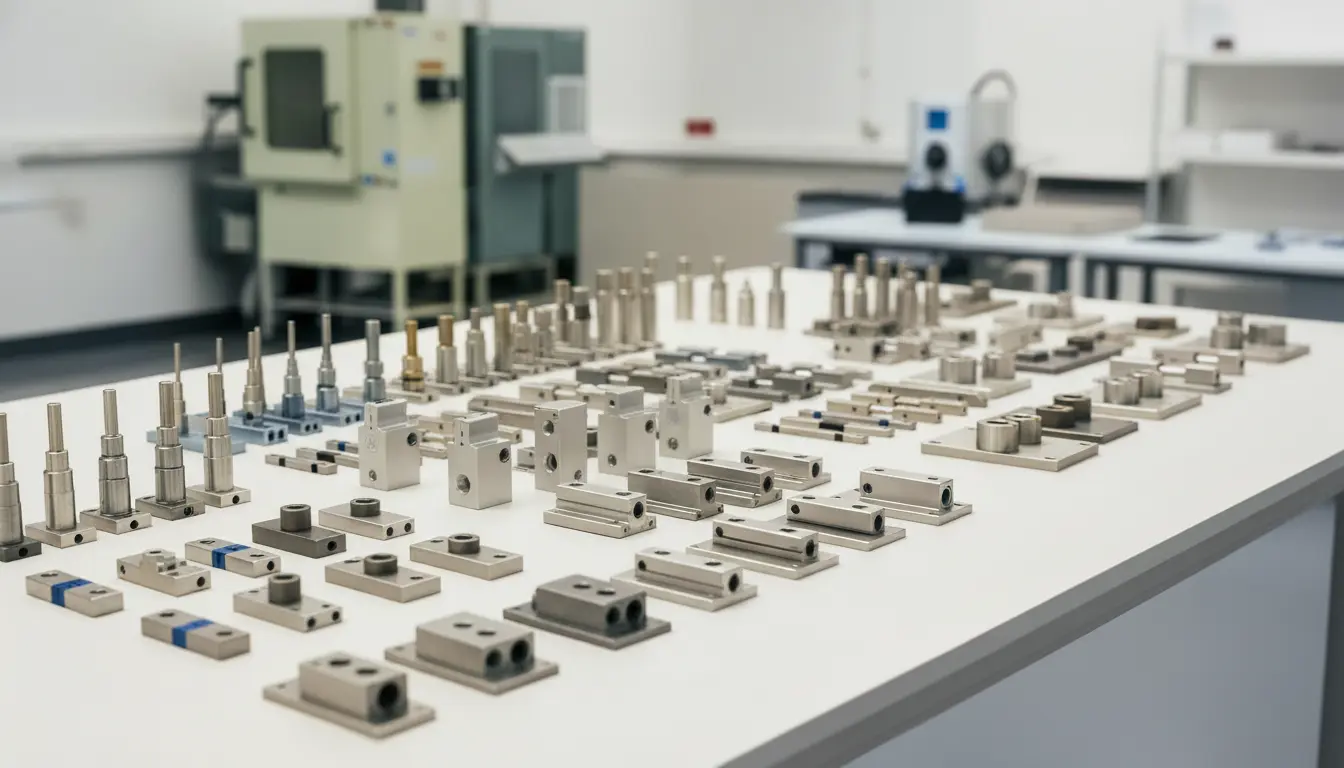
In today’s data‑driven horticulture, arboleaf accuracy isn’t a luxury—it’s the linchpin that turns a modest backyard garden into a high‑performance, sustainable ecosystem. This guide explains the science behind precise plant monitoring, shows where buyers commonly slip up, and demonstrates how LoadCellShop Australia can supply the ultra‑reliable load‑cell hardware you need to achieve true arboleaf accuracy.
Introduction
Gardeners, commercial growers, and research labs alike struggle with a common problem: inconsistent, noisy data that hides the real health of a plant. When you cannot trust the numbers, you cannot make informed irrigation, fertilisation, or pruning decisions, and yields suffer. By leveraging arboleaf accuracy, you gain a clear, real‑time picture of water uptake, biomass growth, and stress response—allowing you to optimise inputs and maximise output.
At LoadCellShop Australia (operated by Sands Industries), we specialise in providing the most accurate load‑cell solutions for precision agriculture and horticultural research. From micro‑load cells that detect a single gram of leaf weight change to industrial‑grade platforms for large‑scale greenhouse monitoring, our end‑to‑end service (free consultation, custom designs, 5 % bulk‑order discount) ensures you never settle for “good enough.”
Explore this comprehensive, technically‑rich article to understand arboleaf accuracy, avoid costly mistakes, and discover the exact load‑cell products that will elevate your plant‑monitoring system.
1. How Arboleaf Accuracy Works – The Physics Behind Plant Weight Sensing
1.1 The principle of strain‑gauge load cells
A strain‑gauge load cell converts a mechanical force (the weight of a plant, pot, or water) into an electrical signal. When the cell deforms under load, the resistance of the bonded foil gauges changes proportionally, producing a millivolt output that is then amplified and digitised.
Key technical terms:
- Full‑scale output (FSO) – the maximum millivolt signal at rated capacity.
- Excitation voltage – the stable DC supply (typically 5–12 V) used to power the gauges.
- Temperature coefficient of sensitivity (TCS) – how much the output drifts with temperature changes.
1.2 Why weight matters for plant health
Plants continuously exchange water with the environment. Subtle weight fluctuations (as low as 0.1 g) correlate directly with transpiration, nutrient uptake, and root growth. By recording this data with arboleaf accuracy, you can:
- Detect early signs of drought stress.
- Quantify the efficacy of fertigation schedules.
- Model biomass accumulation for yield forecasting.
1.3 Integrating load cells into a smart garden
A typical arboleaf accuracy system includes:
| Component | Role |
|---|---|
| Load cell platform | Directly measures pot or plant weight. |
| Signal conditioner (bridge amp) | Amplifies the micro‑volt signal to a usable range (0‑5 V). |
| IoT gateway (e.g., ESP‑32, Raspberry Pi) | Sends data to the cloud or local server. |
| Software dashboard | Visualises trends, triggers alerts, logs data. |
The workflow is simple: Weight → Amplifier → ADC → Wireless transmission → Cloud analytics.
2. Selecting the Right Load Cell for Arboleaf Accuracy
Choosing a load cell isn’t about “the biggest capacity wins.” You need the right capacity‑to‑accuracy ratio, material compatibility, and environmental rating. Below is a concise selection guide for horticultural applications.
| Decision Factor | What to Look For | Why It Matters for Arboleaf Accuracy |
|---|---|---|
| Capacity | 0.5 kg – 50 kg for most pot‑size plants; <0.5 kg for seedling trays. | Over‑specifying capacity reduces resolution. |
| Accuracy class | Class 0.1 (0.1 % of full scale) or better. | Guarantees that a 0.2 g change is detectable. |
| Material | Stainless steel (316L) or aluminium with corrosion‑resistant coating. | Prevents rust in humid greenhouse environments. |
| Mounting style | Shear‑beam or compression‑rod for vertical loads. | Provides linear response under plant weight. |
| Temperature range | -20 °C to +85 °C (or wider for outdoor gardens). | Minimises TCS‑related drift. |
| Output type | mV/V (typical) or digital (e.g., HX711 compatible). | Digital outputs simplify integration with micro‑controllers. |
2.1 Common pitfalls
| Mistake | Consequence | Remedy |
|---|---|---|
| Selecting a high‑capacity, low‑resolution cell | Weight changes <1 % become invisible → false “steady state.” | Pick a cell whose full‑scale rating is ≤10 × the maximum expected weight. |
| Ignoring environmental sealing | Moisture ingress causes drift → unreliable arboleaf accuracy. | Choose IP‑65 or higher, or add protective housing. |
| Using cheap, uncalibrated cells from unknown vendors | Calibration drift >5 % over weeks → decisions based on wrong data. | Procure from reputable manufacturers (e.g., S-type M701, BSC‑S series) and request a calibration certificate. |
3. Where Buyers Go Wrong – Real‑World Case Studies
3.1 Case Study 1 – “The Budget‑Only Garden”
A hobbyist bought a $12 “kitchen‑scale” load cell kit to monitor his tomato plants. The kit was rated 5 kg with a class 2.0 accuracy. Within a week, the recorded weight jittered ±200 g due to temperature swings and low‑grade strain gauges. The gardener concluded that “plants don’t lose weight,” abandoned data collection, and over‑irrigated, leading to root rot.
Lesson: Cheaper options fail to meet arboleaf accuracy because they lack the temperature compensation and high‑resolution needed for live‑plant monitoring.
3.2 Case Study 2 – “The Over‑Engineered Greenhouse”
A commercial greenhouse installed 100 kg capacity load cells on 10‑liter pots. The cells were class 0.5, but the capacity was 20 × the actual load. Resolution dropped to 100 g per count, masking subtle transpiration cycles. The operators missed early drought signals, causing a 7 % yield loss.
Lesson: Oversizing capacity sacrifices the granularity essential for arboleaf accuracy.
3.3 Case Study 3 – “The Wrong Sensor Mix”
A research lab combined humidity sensors with a low‑cost compression load cell that lacked IP‑67 sealing. In a misting chamber, water ingress caused the cell to short‑circuit after three days, corrupting all data.
Lesson: When NOT to use certain products – don’t pair non‑sealed load cells with high‑humidity environments.
4. When Cheaper Options Fail – The Hidden Costs
| Hidden Cost | Description |
|---|---|
| Calibration drift | Low‑cost cells often lose calibration within weeks, requiring re‑calibration equipment you didn’t budget for. |
| Data noise | Poor shielding leads to electromagnetic interference from grow‑light drivers, inflating the noise floor. |
| Reduced lifespan | Uncoated steel corrodes in greenhouse spray, causing early failure and replacement costs. |
| Compliance gaps | Many cheap cells lack CE or RoHS certification, exposing you to legal risk in regulated labs. |
Investing in a precision load cell from LoadCellShop Australia eliminates these hidden expenses. Our products arrive with factory‑calibrated certificates, IP‑65 housings, and custom‑tuning options for your specific arboreal monitoring needs.
5. Product Recommendations – Load Cells Optimised for Arboleaf Accuracy
Below are five curated load cells that deliver the level of precision needed for plant‑weight monitoring. Each item is available through LoadCellShop Australia’s online shop.
| # | Model | Capacity | Accuracy Class | Material | Approx. Price (AUD) | SKU |
|---|---|---|---|---|---|---|
| 1 | S-Type M701‑02 | 2 kg | 0.1 % | Stainless steel 316L | $145 | M701‑02 |
| 2 | Compression‑Rod BSC‑S‑05 | 5 kg | 0.05 % | Aluminium alloy (6061‑T6) | $212 | BSC‑S‑05 |
| 3 | Mini‑Shear Beam LCM‑10 | 10 kg | 0.03 % | Stainless steel 304 | $280 | LCM‑10 |
| 4 | Custom‑Fit Plant‑Cell™ (CX‑P12) | 12 kg | 0.04 % | 316L stainless, IP‑68 sealed | $350 (MOQ 20) | CX‑P12 |
| 5 | HX711‑Ready Load Cell Kit (LC‑HX‑5) | 5 kg | 0.1 % | Aluminium + digital HX711 board | $98 | LC‑HX‑5 |
5.1 Why each is suitable
S-Type M701‑02 – Perfect for seedling trays or small potted herbs where sub‑gram resolution is critical. Its compact size fits under 5‑cm pots, and the 0.1 % class guarantees arboleaf accuracy for daily moisture balance.
Compression‑Rod BSC‑S‑05 – Ideal for mid‑size containers (5 kg max) such as tomato or pepper plants. The 0.05 % accuracy captures a 0.025 kg (25 g) change, useful for detecting early water stress. Its aluminium body reduces weight overhead.
Mini‑Shear Beam LCM‑10 – Suited for large ornamental pots (up to 10 kg). The shear‑beam geometry provides linearity across the full range, while the 0.03 % class pushes the resolution to ~3 g, enabling accurate biomass growth tracking over weeks.
Custom‑Fit Plant‑Cell™ CX‑P12 – When you need a sealed, rugged solution for mist chambers or outdoor beds. The IP‑68 rating prevents water ingress, and custom mounting brackets can be machined to fit any pot shape.
HX711‑Ready Load Cell Kit LC‑HX‑5 – For DIY hobbyists who want a low‑cost, digital-ready platform. While not as robust as the premium models, it meets the required 0.1 % class for basic arboleaf accuracy on indoor herb gardens.
5.2 When each is NOT ideal
| Model | Not Ideal For | Reason |
|---|---|---|
| M701‑02 | Heavy fruit trees | Capacity too low; risk of over‑loading. |
| BSC‑S‑05 | High‑humidity mist chambers | No IP‑rating; water can cause drift. |
| LCM‑10 | Ultra‑small seedlings (<0.2 kg) | Resolution limited to ~3 g. |
| CX‑P12 | Budget‑constrained hobby projects | MOQ and price higher than simple kits. |
| LC‑HX‑5 | Commercial greenhouse with regulatory compliance needs | Lacks CE/ROHS certification and IP‑rating. |
5.3 Better alternatives
- For large orchard weigh‑ins, consider a 500 kg class 0.03 % industrial load cell (outside the scope of this article).
- For environmental exposure >85 °C, look at high‑temperature ceramic‑based load cells.
All the featured products are in stock at LoadCellShop Australia. Visit the shop for detailed datasheets and to request a free consultation on custom integration.
6. Installation & Calibration – Achieving True Arboleaf Accuracy
6.1 Step‑by‑step installation (Numbered)
- Prepare the mounting platform – Ensure a flat, vibration‑free surface. For pots, use a level wooden or aluminium base that fits the load‑cell footprint.
- Attach the load cell – Secure using the provided bolts. Align the cell’s tension axis perpendicular to the weight direction.
- Connect the signal conditioner – Wire the four‑wire strain‑gauge leads to the bridge amplifier (e.g., HX711) following the colour code (Excitation+, Excitation‑, Signal+, Signal‑).
- Supply excitation voltage – Apply a stable 5 V DC (use a regulated power supply).
- Zero the system – With the container empty, run the tare command from your micro‑controller (e.g.,
scale.tare()in Arduino). - Calibrate – Place known test weights (e.g., calibrated 100 g, 500 g, 1 kg standards) and record the output. Compute the scale factor (V/g) and input it into the firmware.
- Validate temperature compensation – Perform a quick thermal drift test (measure at 20 °C, 30 °C, 40 °C) and apply the provided TCS compensation table.
- Integrate with IoT gateway – Connect via I²C, SPI, or UART, and configure data transmission intervals (e.g., 60 s).
6.2 Best‑practice tips (Bullet list)
- Use anti‑vibration pads under the base to minimise mechanical noise.
- Shield signal cables (twisted pair, foil shield) to avoid EMI from grow‑lights.
- Periodically re‑calibrate (monthly for indoor setups, weekly for high‑precision research).
- Log raw millivolt data alongside temperature for post‑processing drift correction.
6.3 Data interpretation for growers
| Metric | Interpretation |
|---|---|
| Weight loss > 2 % per day | Possible drought or root damage – increase irrigation. |
| Weight gain after fertiliser | Successful nutrient uptake – maintain schedule. |
| Steady weight plateau | Plant reached max growth phase or sensor saturation – verify sensor capacity. |
7. Comparative Table – Load Cell Options vs. Alternative Sensors
| Technology | Measurement Focus | Typical Accuracy | Cost (AUD) | Suitability for Arboleaf Accuracy |
|---|---|---|---|---|
| Strain‑gauge load cell | Weight (gram‑level) | 0.03 % – 0.1 % | $100‑$350 | Highest – Direct mass tracking. |
| Capacitive soil‑moisture probe | Volumetric water content | ±5 % VWC | $45‑$120 | Good for moisture, but indirect for weight changes. |
| Optical NDVI sensor | Leaf chlorophyll index | ±2 % reflectance | $250‑$500 | Useful for health, not mass. |
| Laser displacement sensor | Stem/leaf height | ±0.1 mm | $300‑$800 | Measures growth, but not transpiration directly. |
| Thermistor‑based temperature sensor | Ambient/soil temperature | ±0.5 °C | $10‑$30 | Complementary, not a replacement for weight data. |
Takeaway: Only strain‑gauge load cells provide the direct measurement needed for reliable arboleaf accuracy. Complementary sensors can enrich the dataset but cannot substitute weight data.
8. Mistakes to Avoid – Checklist
- ❌ Buying a “kitchen scale” for outdoor use – Lacks IP‑rating; susceptible to corrosion.
- ❌ Ignoring the temperature coefficient** – Leads to drift when greenhouse temperature swings 30 °C.
- ❌ Over‑loading the cell – Permanently deforms the strain gauges, ruining accuracy.
- ❌ Skipping the calibration routine – Assumes factory calibration holds under field conditions, which is rarely true.
- ❌ Using a single sensor for multiple pots – Weight sharing introduces cross‑talk and noise, reducing arboleaf accuracy.
9. Real‑World Applications – From Home Garden to Industrial Greenhouse
9.1 Home‑garden smart pot
A homeowner installed a S‑Type M701‑02 beneath a 3‑liter pot of basil. Using an Arduino Nano with an HX711, the system logged a 0.8 g weight loss each night. A simple script triggered the irrigation valve when loss exceeded 1 g, cutting water use by 30 % while keeping leaf colour vibrant.
9.2 Commercial greenhouse
A midsize greenhouse in Victoria equipped each 15‑liter production bench with Compression‑Rod BSC‑S‑05 cells, feeding data to a cloud‑based dashboard. Analysis showed a 5 % over‑irrigation pattern during peak summer, prompting a schedule change that saved ≈ 12 000 L water per month and increased average tomato weight by 4 %.
9.3 Research laboratory
A university plant‑physiology lab used Custom‑Fit Plant‑Cell CX‑P12 in a mist chamber (relative humidity ≈ 95 %). The IP‑68 sealed cells survived continuous exposure for six months, delivering sub‑gram resolution necessary for studying transpiration dynamics under controlled CO₂.
10. Frequently Asked Questions (FAQ)
Q1: How often should I calibrate my load cell for arboleaf accuracy?
A: For indoor hobby setups, monthly calibration is sufficient. In high‑precision research or commercial settings, weekly checks are recommended, especially if temperature swings exceed 10 °C.
Q2: Can I use a load cell without a dedicated signal conditioner?
A: While it’s technically possible, the micro‑volt output is too low for reliable ADC conversion. A bridge amplifier (e.g., HX711, INA125) is essential for achieving true arboleaf accuracy.
Q3: Are there Australian standards governing load‑cell use in agriculture?
A: Yes. The AS/NZS 6090 series outlines safety and performance requirements for weighing equipment. LoadCellShop Australia supplies CE‑marked cells that meet these standards.
Q4: What warranty does LoadCellShop offer?
A: All load cells ship with a 12‑month manufacturer warranty and free technical support for the first 90 days. Custom orders include a 2‑year warranty.
Q5: How does the 5 % bulk‑order discount work?
A: Order 10 + units of the same SKU and the discount is automatically applied at checkout. For mixed‑SKU bulk purchases, contact us for a tailored quote.
11. Why Choose LoadCellShop Australia for Your Arboleaf Accuracy Journey
- End‑to‑end expertise – From selection to integration, our engineers provide free consultation and custom‑design services.
- Local support – Based in Unit 27/191 McCredie Road, Smithfield NSW 2164, we offer same‑day dispatch across Australia.
- Competitive pricing – Transparent AUD pricing, 5 % bulk discount, and no hidden fees.
- Quality assurance – Every cell ships with a calibration certificate, CE and RoHS compliance.
- Technical resources – Access to datasheets, wiring diagrams, and software libraries directly from our website.
Ready to unlock true arboleaf accuracy for your garden or operation?
Explore our full catalogue at LoadCellShop Australia, request a free engineering consultation, or speak directly with our specialists at +61 4415 9165 or +61 477 123 699.
12. Conclusion
Achieving arboleaf accuracy is no longer a futuristic dream—it is an attainable reality when you pair the right strain‑gauge load cell with a robust data‑acquisition platform. By avoiding the common pitfalls of undersized capacity, poor environmental sealing, and cheap un‑calibrated sensors, you protect your investment and ensure every gram of plant weight translates into actionable insight.
LoadCellShop Australia stands ready to be your premier partner, delivering precisely engineered load‑cell solutions, custom designs, and knowledgeable support—all backed by Australian‑based service and a 5 % bulk discount.
Take the next step toward precision horticulture. Visit our Contact page or head straight to the Shop to start building a data‑driven garden that thrives on true arboleaf accuracy.
All product specifications are subject to change. Prices listed are indicative and may vary based on quantity and customization.