
Blog
Boost Your Production: The Ultimate Guide to Selecting the Perfect Glass Jar Packing Machine

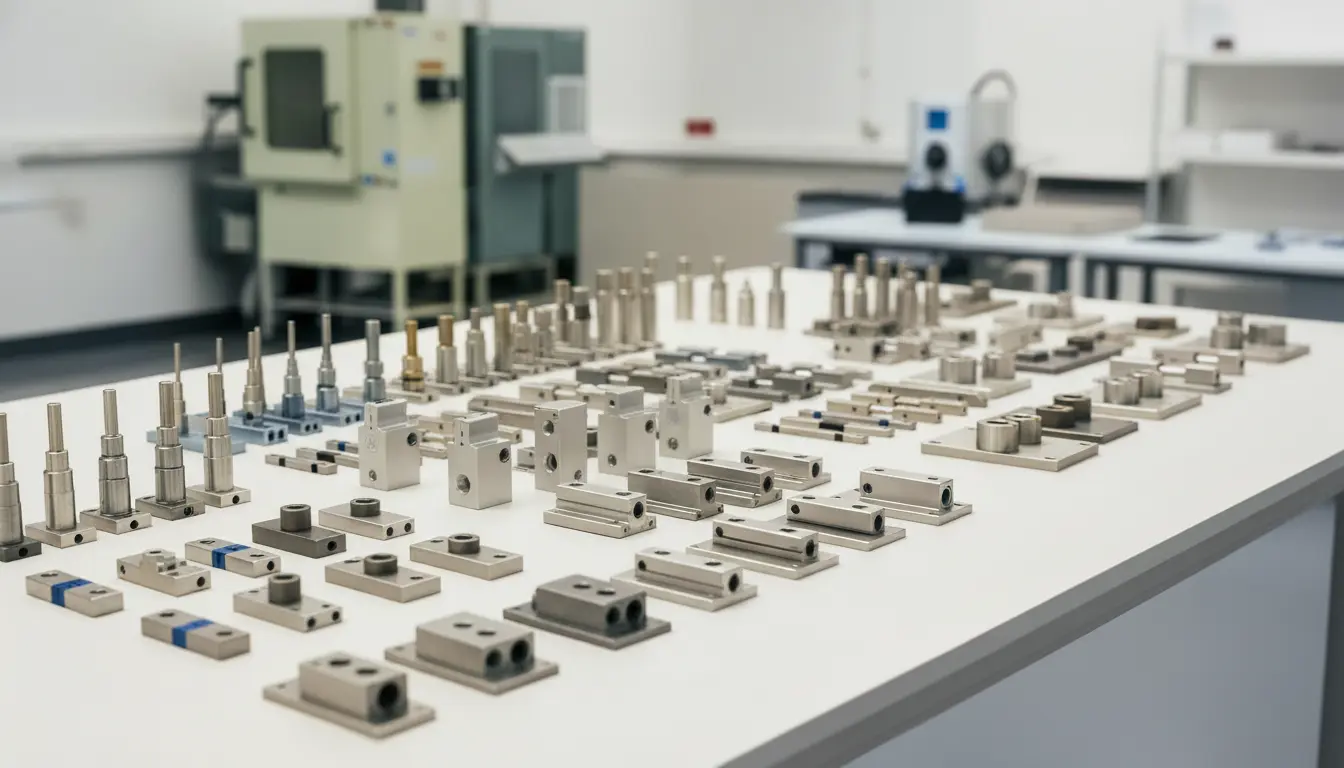
In today’s fast‑moving consumer goods market, a reliable glass jar packing machine can be the decisive factor that separates a bottleneck from a seamless production line. Whether you are an engineer designing an automated packaging cell, a procurement manager chasing cost‑efficiency, or a QA specialist safeguarding product integrity, this guide offers the technical depth, practical check‑lists, and vendor insights you need to make the right investment.
Introduction
Manufacturers often struggle to keep up with growing demand while maintaining strict quality standards. A poorly chosen glass jar packing machine can lead to inconsistent fill weights, frequent downtime, and costly scrap—issues that erode profit margins and damage brand reputation. This guide solves that problem by walking you through the physics of jar filling, the essential selection criteria, the hidden pitfalls of “cheap” alternatives, and the exact load‑cell solutions that guarantee precision every cycle.
Ready to upgrade? Our free consultation at LoadCellShop Australia (operated by Sands Industries) will match you with the perfect weighing sensor and auxiliary equipment for your new line.
How a Glass Jar Packing Machine Works
Understanding the inner workings of a glass jar packing machine is the first step toward selecting the right unit. Most modern systems combine three core subsystems:
| Sub‑system | Primary Function | Typical Components |
|---|---|---|
| Filling | Deliver the exact product volume into each jar | Volumetric, gravimetric (weigh‑by‑load‑cell) or pump‑based fillers |
| Weighing/Verification | Confirm each jar meets target weight tolerance | Load cells (compression, shear‑beam, or S‑type), signal conditioners, PLC |
| Sealing & Capping | Secure the jar for transport and shelf life | Screw caps, induction sealers, torque‑controlled applicators |
The Role of Load Cells
In gravimetric filling, the load cell acts as the “brain” that measures mass in real time. The filling valve stays open until the cell reads the preset setpoint, then shuts off automatically. This closed‑loop control reduces product waste and guarantees compliance with regulatory tolerance (often ±0.5 % for food & beverage, tighter for pharmaceuticals).
Tip: Integrating a high‑resolution load cell from LoadCellShop (e.g., the S‑Type 1000 kg 0.03 % model) can shave 0.2 % off overall product variance—translating into millions of dollars saved on large‑scale runs.
Key Criteria for Selecting the Perfect Glass Jar Packing Machine
When evaluating suppliers, focus on the parameters below rather than headline price alone.
1. Capacity & Throughput
- Nominal jar size: Diameter and height affect turret design.
- Maximum fill rate: Measured in jars/hour; align with your production schedule.
- Scalability: Can the machine be upgraded with additional stations?
2. Accuracy & Tolerance
- Weight tolerance: Typical ±0.5 % for food, ±0.2 % for pharma.
- Repeatability: How consistently does the system hit the target under identical conditions?
- Load‑cell resolution: Higher resolution = tighter control (e.g., 0.01 % of full scale).
3. Material Compatibility & Hygiene
- Food‑grade stainless steel (SS304/SS316) for all food‑contact surfaces.
- Corrosion resistance if handling acidic or alkaline products.
- Clean‑in‑Place (CIP) capability for pharma or beverage lines.
4. Integration & Control
- PLC compatibility: Siemens, Rockwell, or Mitsubishi.
- Communication protocols: Ethernet/IP, Modbus TCP, OPC‑UA.
- Vision systems: For jar detection and label verification.
5. Footprint & Facility Constraints
- Floor space: Ensure the machine fits within existing layout.
- Power requirements: Typical 3‑phase 415 V, 50 Hz; verify with your electrical team.
6. Service & Support
- Local technical support: Faster response times reduce OEE loss.
- Spare parts availability: Critical for high‑utilisation lines.
- Training: On‑site operator training can cut start‑up time by up to 30 %.
Where Buyers Go Wrong, When Cheaper Options Fail, and When NOT to Use Certain Products
1. Over‑Emphasising Purchase Price
Many procurement teams chase the lowest upfront cost, only to discover:
| Symptom | Root Cause | Consequence |
|---|---|---|
| Frequent over‑fills/under‑fills | Low‑resolution load cell (e.g., 1 % accuracy) | Product waste, regulatory non‑compliance |
| Unplanned downtime | Inadequate sealing torque control | Jar breakage, leakage |
| Excessive re‑work | Poor hygiene design | Contamination, batch rejection |
2. Skipping Load‑Cell Specification Checks
Cheap “generic” weigh modules often lack:
- Temperature compensation – leads to drift in hot environments.
- Creep resistance – causes slow drift during long fill cycles.
Result: Calibration drift that forces recalibration every 2‑3 weeks, inflating maintenance costs.
3. Using the Wrong Machine Type for the Product
| Product Type | Unsuitable Machine | Why It Fails |
|---|---|---|
| High‑viscosity sauces | High‑speed volumetric filler | Shear forces cause splatter, inconsistent fill |
| Fragile glass jars (thin wall) | High‑impact screw‑capping head | Excess torque cracks jars |
| Pharmaceutical powders | Open‑loop filling without load cell | Cannot meet tight ±0.2 % tolerance |
Bottom line: Always match the machine’s filling principle and mechanical design to the physical properties of both the product and the glass container.
Load Cell Integration – The Unsung Hero of Accurate Packing
A glass jar packing machine without a properly selected load cell is like a blind driver on a busy highway. LoadCellShop Australia offers an end‑to‑end solution that includes:
- Free engineering consultation – We analyse your fill rates, jar weight, and environmental conditions.
- Custom load‑cell selection – From 0.5 kg compression cells for mini‑jars to 2 tonne S‑type cells for bulk fills.
- Signal conditioning & software integration – Ensuring seamless communication with your PLC.
- Calibration & certification – NMI‑accredited calibration for traceability.
Visit our main portal for more details: https://www.loadcellsolutions.com.au
Product Recommendations – Load Cells Optimised for Glass Jar Packing Machines
Below are five load‑cell families that have proven performance in jar‑filling applications. All are stocked in our online shop and can be shipped Australia‑wide.
| Model | Capacity | Accuracy Class | Material | Application Fit | Approx. Price (AUD) | SKU |
|---|---|---|---|---|---|---|
| LC‑S1000‑03 | 0–1000 kg | 0.03 % FS | Stainless steel (SS304) | Large‑capacity sauce & jam lines, 500‑800 g jars | $2,150 | SKU‑LC‑S1000‑03 |
| LC‑C500‑05 | 0–500 kg | 0.05 % FS | Aluminium alloy (light‑weight) | Small‑batch nutri‑supplement jars, <250 g | $1,280 | SKU‑LC‑C500‑05 |
| LC‑S‑B500‑02 | 0–500 kg | 0.02 % FS | Stainless steel (SS316) (corrosion‑resistant) | Acidic fruit preserves, CIP‑compatible | $2,350 | SKU‑LC‑SB500‑02 |
| LC‑T‑200‑01 | 0–200 kg | 0.01 % FS | Titanium (ultra‑clean) | Pharmaceutical powders, strict GMP | $3,600 | SKU‑LC‑T‑200‑01 |
| LC‑Shear‑300‑04 | 0–300 kg | 0.04 % FS | Stainless steel (SS304) | High‑speed capping stations, impact‑resistant | $1,950 | SKU‑LC‑SH‑300‑04 |
Why Each Model Is Suitable
- LC‑S1000‑03 – Its high capacity and 0.03 % accuracy make it ideal for bulk‑fill operations where jars weigh up to 750 g. The robust SS304 housing withstands wash‑down cycles.
- LC‑C500‑05 – Light‑weight aluminium reduces moving mass, improving response time for fast, low‑weight jars (e.g., 50 g vitamin bottles).
- LC‑S‑B500‑02 – The SS316 construction tolerates aggressive acidic contents, preventing corrosion that could bias measurements.
- LC‑T‑200‑01 – Titanium eliminates magnetic interference, crucial for pharmaceutical environments where trace metal contamination is forbidden.
- LC‑Shear‑300‑04 – Shear‑beam geometry gives excellent shock resistance, perfect for high‑speed capping stations where impact loads occur.
When the Model Is NOT Ideal
| Model | Unsuitable Scenario | Better Alternative |
|---|---|---|
| LC‑S1000‑03 | Low‑weight (<100 g) powders – over‑spec capacity reduces resolution. | LC‑T‑200‑01 (higher resolution) |
| LC‑C500‑05 | High‑corrosive acids – aluminium may corrode. | LC‑S‑B500‑02 (SS316) |
| LC‑S‑B500‑02 | Heavy industrial sauces >800 g – exceeds capacity. | LC‑S1000‑03 |
| LC‑T‑200‑01 | Budget‑constrained food line – titanium price premium. | LC‑S1000‑03 (good accuracy at lower cost) |
| LC‑Shear‑300‑04 | Low‑speed, low‑impact lines – shear‑beam may be over‑engineered. | LC‑C500‑05 |
All listed SKUs are available for immediate order through our shop: https://www.loadcellsolutions.com.au/shop
Installation and Calibration Best Practices
A correctly installed load cell is as important as selecting the right one. Follow these numbered steps to guarantee repeatable performance:
Mounting Surface Preparation
- Verify flatness within 0.02 mm.
- Clean with isopropyl alcohol; remove all debris.
Apply Proper Torque
- Use a calibrated torque wrench (usually 8–12 Nm for 500 kg cells).
- Tighten bolts in a criss‑cross pattern to avoid distortion.
Connect Wiring
- Follow the manufacturer’s shielded‑pair diagram.
- Keep cable bend radius ≥ 5× cable diameter.
Zero Balance Adjustment
- With no load, set the output to zero via the signal conditioner.
Load Verification
- Place calibrated test weights (e.g., 10 %, 50 %, 100 % of FS).
- Record output; compute linearity error (must be <0.1 %).
Temperature Compensation Check
- Perform the load verification at minimum, nominal, and maximum operating temperatures.
Documentation & Traceability
- Assign a unique ID, store calibration certificates, and update the maintenance schedule.
Maintenance, Troubleshooting, and ROI
Routine Maintenance Checklist (Monthly)
- Visual inspection: Look for corrosion, cracks, or loose fasteners.
- Tension check: Re‑torque mounting bolts to spec.
- Cable integrity: Verify shielding continuity.
- Software audit: Ensure firmware is up to date.
Common Fault Symptoms & Quick Fixes
| Symptom | Likely Cause | Quick Fix |
|---|---|---|
| Output drift >0.2 %/hr | Temperature overload | Install additional thermal shielding |
| Noisy signal | Cable micro‑crack | Replace shielded cable, verify grounding |
| Frequent overload trips | Over‑filling due to faulty valve | Re‑calibrate fill valve timing, check pneumatic pressure |
Calculating Return on Investment
| Cost Item | Typical Value (AUD) | Pay‑back Period |
|---|---|---|
| Load cell (e.g., LC‑S1000‑03) | $2,150 | – |
| Machine downtime reduction (5 % per year) | $30,000 saving | 1.2 years |
| Product waste reduction (0.3 % of 10 t/day) | $10,950 saving | 0.5 years |
| Total Pay‑back | ≈ 1.7 years | < 2 years |
Frequently Asked Questions (FAQ)
Q1: Do I need a separate load cell for each filling head?
A: For high‑throughput lines, a dedicated load cell per head ensures independent control and prevents cross‑talk. Small batch lines can share a single cell with a fast‑switching multiplexer.
Q2: How often should I recalibrate the load cell?
A: Industry standards recommend annual NMI‑accredited calibration, or sooner if you notice drift or after major maintenance.
Q3: Can I use the same load cell for both weighing and capping torque measurement?
A: Not advisable. Capping torque requires a torque transducer, whereas weighing needs a force‑type load cell. Using the correct sensor maintains accuracy and prolongs equipment life.
Conclusion
Choosing the right glass jar packing machine is a strategic decision that influences product quality, operational efficiency, and long‑term profitability. By focusing on capacity, accuracy, material compatibility, and—critically—integrating a high‑quality load cell from LoadCellShop Australia, you can eliminate the hidden costs of cheap alternatives, avoid common installation errors, and future‑proof your packaging line.
Ready to transform your packaging process? Our experts are standing by to provide a free, no‑obligation consultation, recommend the ideal load‑cell configuration, and guide you through seamless integration.
Take the Next Step
- Contact our technical team: https://www.loadcellsolutions.com.au/our-contacts/
- Browse our ready‑to‑ship load‑cell catalog: https://www.loadcellsolutions.com.au/shop
LoadCellShop Australia – your premier destination for precision load cells, end‑to‑end packaging solutions, and unmatched local support.
LoadCellShop Australia (operated by Sands Industries)
Unit 27/191 McCredie Road, Smithfield NSW 2164, Australia
Phone: +61 4415 9165 | +61 477 123 699
Email: sales@sandsindustries.com.au
Website: https://www.loadcellsolutions.com.au
Enjoy 5 % off bulk orders and inquire about custom load‑cell designs on request.