
Blog
C172M Weight and Balance: The Complete Pilot’s Guide to Safe Loading, Calculations & Performance

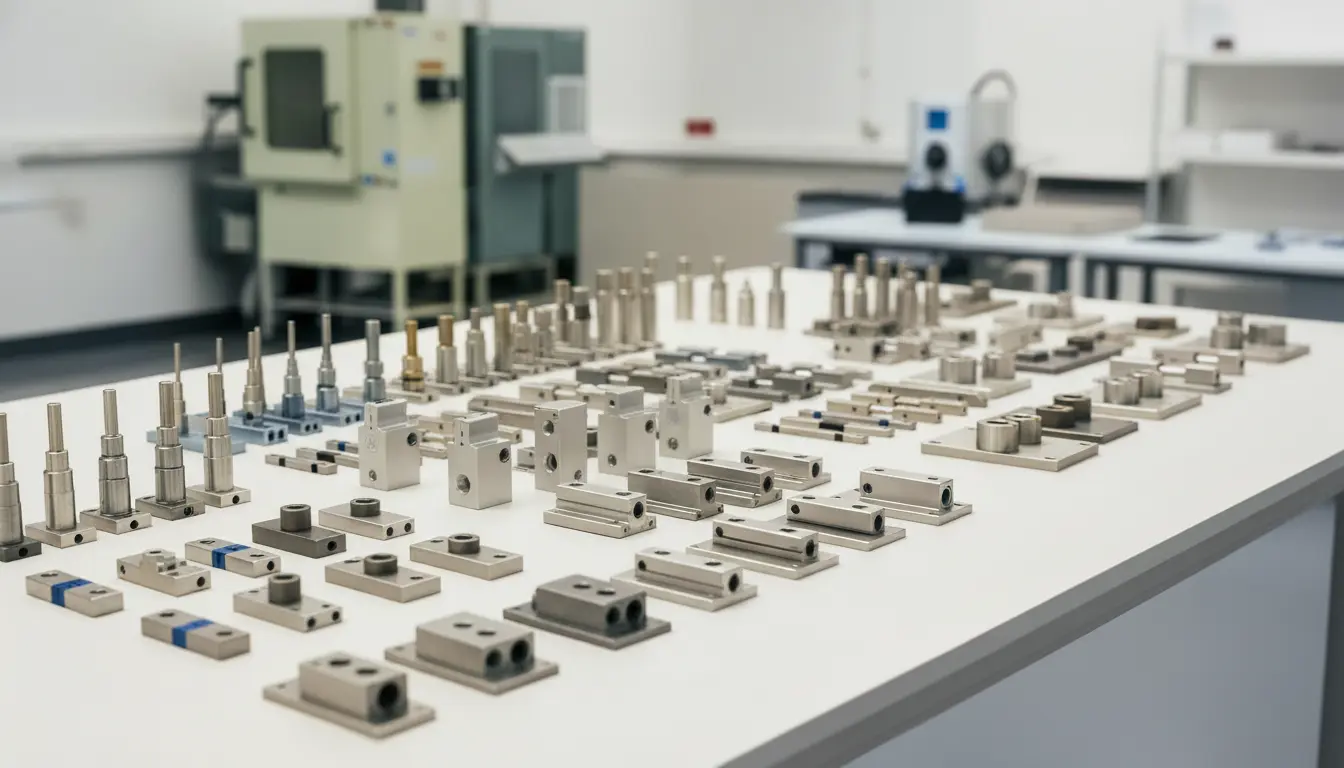
c172m weight and balance is a cornerstone of safe flight operations, yet many pilots and maintenance crews treat it as a checklist item rather than a dynamic performance factor. In this exhaustive guide we break down the theory, walk you through the exact calculations, highlight the hidden risks of cheap measurement gear, and show you how LoadCellShop Australia can equip you with industrial‑grade load‑cell solutions that keep every C172M inside its certified envelope.
Introduction
Every Cessna C172M takes off with a specific combination of empty weight, fuel, passengers, baggage, and equipment. Mis‑aligning any of these elements can shift the aircraft’s center of gravity (CG) outside the approved envelope, degrading handling qualities, increasing stall speed, and in extreme cases causing a loss of control. For aviation engineers, procurement managers, OEM integrators, lab technicians, QA teams, and industrial buyers across Australia, understanding c172m weight and balance isn’t just a regulatory requirement—it’s a performance‑optimization tool that directly influences fuel burn, climb rate, and runway length.
This article delivers a step‑by‑step methodology, real‑world examples, a comparison of the best load‑cell products on the market, and a clear “mistakes‑to‑avoid” checklist. At the end you’ll know exactly how to calculate, verify, and maintain the weight and balance of your C172M, and you’ll have a trusted supplier ready to provide free consultation, custom‑engineered load cells, and a 5 % bulk‑order discount.
Understanding c172m weight and balance Basics
1. Weight Categories in the C172M
| Category | Typical Value (kg) | What It Represents |
|---|---|---|
| Basic Empty Weight (BEW) | 730 kg | Airframe, engine, fixed equipment, and unusable fuel |
| Maximum Take‑Off Weight (MTOW) | 1 111 kg | Upper limit for safe operation |
| Maximum Zero‑Fuel Weight (MZFW) | 950 kg | Weight of aircraft with all fuel removed |
| Payload Allowance | 300 kg | Passengers, baggage, and removable equipment |
| Maximum Fuel Carry | 208 kg (≈ 270 L) | Usable fuel for a standard C172M |
Understanding these numbers lets you quickly spot an overload before you even start the CG calculation.
2. The Center of Gravity (CG)
The center of gravity is the point about which the aircraft balances in all three axes. For the C172M, the CG must lie between 30 % and 45 % of the Mean Aerodynamic Chord (MAC), which translates to 254 mm–381 mm aft of the datum (the front edge of the firewall).
- Forward CG → increased longitudinal stability, higher stall speed, reduced maneuverability.
- Aft CG → lighter control forces, reduced stability, risk of “tail‑heavy” stall.
Critical technical term: Moment arm – the perpendicular distance from the datum to the item’s weight line of action, expressed in meters (m) or inches (in).
3. Moment Calculation
Moment (M) = Weight (W) × Arm (A)
All moments are summed, then divided by the total weight to locate the CG:
[
\text{CG} = \frac{\sum (W_i \times A_i)}{\sum W_i}
]
Where (W_i) is each item’s weight and (A_i) its arm.
Advanced c172m weight and balance Calculations
Below is a numbered process that you can use for every flight‑planning session.
1️⃣ Gather Accurate Weights – Use a calibrated load cell or an approved aircraft scale.
2️⃣ Record Arms – Refer to the Pilot Operating Handbook (POH) for each station’s arm (e.g., front seat = 36 in, rear seat = 73 in).
3️⃣ Compute Individual Moments – Multiply weight by arm.
4️⃣ Sum Weights & Moments – Separate totals for the “zero‑fuel” condition and for the “fuel‑loaded” condition.
5️⃣ Calculate CG – Divide total moment by total weight; confirm the result lies within the 30 %–45 % MAC envelope.
6️⃣ Adjust Loads – If CG is out of limits, shift baggage, add ballast, or redistribute fuel.
Sample Calculation Table
| Item | Weight (kg) | Arm (mm) | Moment (kg·mm) |
|---|---|---|---|
| Empty Aircraft (BEW) | 730 | 254 | 185,420 |
| Pilot (1) | 80 | 360 | 28,800 |
| Front Passenger | 70 | 360 | 25,200 |
| Rear Baggage | 20 | 720 | 14,400 |
| Fuel (100 L) | 72 | 720 | 51,840 |
| Total | 972 | – | 305,660 |
| Calculated CG | – | 315 mm (≈ 34 % MAC) | – |
The aircraft is safely within the envelope, and you now have a concrete data set to feed into performance charts.
Why Accurate Weight Measurement Matters for Aircraft Performance
- Fuel Efficiency – A 10 kg overload can increase fuel burn by 0.5 % per hour, eroding operational economics.
- Climb Gradient – An aft CG reduces the required elevator deflection, delivering a modest climb‑rate boost, but may compromise stall characteristics.
- Runway Requirements – Overweight take‑offs demand longer runway distances; for regional airfields this can be a show‑stopper.
- Regulatory Compliance – The Civil Aviation Safety Authority (CASA) mandates documented weight and balance calculations for every flight exceeding 5 minutes of flight time.
Accurate measurement hinges on reliable load cells and digital indicators, not on makeshift kitchen scales or hobbyist hobby‑grade strain gauges.
Common Mistakes: Where Buyers Go Wrong, When Cheaper Options Fail, and When NOT to Use Certain Products
| Mistake | Consequence | Typical “Cheaper” Solution | Why It Fails |
|---|---|---|---|
| Relying on Uncalibrated Scales | Systematic weight error ±5 % → CG drift | “Garage‑scale” or “consumer‑grade kitchen scale” | Load cells are not temperature‑compensated; accuracy class often > 0.5 % FS (full scale) |
| Ignoring Fuel Density Variations | Over/under‑estimate fuel weight → incorrect moment | Using a fixed 0.72 kg/L factor | Fuel temperature changes density by up to 2 % in hot Australian summers |
| Skipping Periodic Calibration | Drift in sensor output over months | “One‑time purchase, no service” | Load cells obey ISO 376; calibration must be recorded at least annually |
| Installing Load Cells Improperly | Bending, shear forces → premature failure | DIY mounting with bolts not rated for shear | Shear load capacity is a critical spec; wrong mounting can exceed it |
| Using Load Cells Below Their Rated Capacity | Overload destruction → inaccurate reading | “Low‑cost 100 kg load cell” for a 1 000 kg aircraft | Over‑range operation leads to plastic deformation, permanent offset |
When NOT to Use Certain Products
- Cheap Micro‑Load Cells (< 10 kg) – Never for aircraft weighing; they lack the necessary capacity and accuracy class (typically only 1 % FS).
- Non‑IP‑rated Indicators – If your scale will be used outdoors or in a maintenance bay with oil spray, an unsealed indicator will fail quickly.
- Analog Gauges without Digital Read‑out – Manual reading introduces human error; for repeatable data you need a digital indicator with data logging.
The takeaway: Invest in industrial‑grade load‑cell solutions designed for dynamic aircraft weighing, and you’ll eliminate the hidden costs of re‑weighs, maintenance delays, and regulatory fines.
Selecting the Right Load Cell for Aircraft Weighing
LoadCellShop Australia (operated by Sands Industries) offers a curated range of load cells that meet ISO 376 standards, feature temperature compensation, and integrate cleanly with digital indicators. Below are five top‑rated models that pair perfectly with the C172M weighing workflow.
| Model | Capacity | Accuracy Class | Material | Application Fit | Approx. Price (AUD) | SKU |
|---|---|---|---|---|---|---|
| SBE‑2000‑1T | 1 500 kg | 0.03 % FS | Stainless Steel (AISI 316) | Fixed‑beam aircraft scales, floor mounting | $1 850 | SBE2000-1T |
| HBM C45‑2 | 2 000 kg | 0.02 % FS | Aluminium alloy | Portable weigh‑in‑motion, high‑speed runway checks | $2 120 | HBM-C452 |
| Mettler Toledo HXC‑2000 | 2 500 kg | 0.02 % FS | Stainless Steel | Integrated with digital read‑out, data‑logger ready | $2 650 | MTHXC2000 |
| Omega LCM202 | 1 200 kg | 0.04 % FS | Stainless Steel | Indoor bench‑scale for component verification | $1 530 | OMLCM202 |
| FUTEK LSB200‑350 | 350 kg | 0.05 % FS | Aluminium | Auxiliary baggage‑weight verification, low‑profile mounting | $965 | FTLB200-350 |
Why Each Model Is Suitable
1. SBE‑2000‑1T – The Heavy‑Duty All‑Rounder
- Why suitable: Capacity exceeds the C172M MTOW by 40 %, providing a safety margin that eliminates overload risk. The 0.03 % FS accuracy class meets the 0.5 % requirement for aviation weighing. Stainless‑steel construction resists corrosion in humid hangar environments.
- When NOT ideal: If you need a portable solution for runway‑side checks, the fixed‑beam design is cumbersome.
- Alternative: HBM C45‑2 for a lightweight, portable system.
2. HBM C45‑2 – Portable Weigh‑In‑Motion (WIM)
- Why suitable: Designed for high‑speed traffic, it can weigh a C172M while it rolls over the sensor, perfect for quick turn‑around at busy regional airports.
- When NOT ideal: In a static hangar environment where floor‑mounted, permanent scales are preferred, the WIM setup may be over‑engineered.
- Alternative: Mettler Toledo HXC‑2000 for a fixed‑mount with integrated display.
3. Mettler Toledo HXC‑2000 – Turnkey Scale + Indicator
- Why suitable: Comes with a built‑in digital read‑out, data‑logger, and USB/RS‑485 connectivity, enabling direct export to maintenance logs. The 0.02 % FS accuracy exceeds aviation requirements.
- When NOT ideal: If you already own a separate indicator or need a custom‑mounting solution, the integrated unit may duplicate hardware.
- Alternative: Pair any load cell (e.g., SBE‑2000‑1T) with a separate indicator you already possess.
4. Omega LCM202 – Bench‑Scale for Component Checks
- Why suitable: Perfect for validating individual items such as spare batteries, avionics boxes, or fuel tanks before they are installed. Its compact footprint fits on a workbench.
- When NOT ideal: Not meant for whole‑aircraft weighing; capacity is insufficient for the C172M MTOW.
- Alternative: Use SBE‑2000‑1T for full‑aircraft weighing.
5. FUTEK LSB200‑350 – Low‑Profile Baggage Scale
- Why suitable: Provides quick verification of passenger baggage and cargo, ensuring that the payload allowance isn’t exceeded. Its 350 kg capacity covers multiple bags with room to spare.
- When NOT ideal: Not suitable for measuring the whole aircraft – the capacity is far too low.
- Alternative: Combine with a higher‑capacity floor scale for the full aircraft weight.
Critical technical term: Accuracy class – a specification (often expressed as a percentage of full scale) that defines the maximum permissible error for a load cell under nominal conditions.
All of these products are stocked by LoadCellShop Australia, where you receive free consultation, custom engineering on request, and a 5 % bulk‑order discount. Visit the shop at https://www.loadcellsolutions.com.au to view the full catalog or request a quote.
Installation and Use of Load Cells in an Aviation Context
Proper installation guarantees repeatable, trustworthy data. Follow these numbered steps:
- Select a Flat, Level Surface – The datum (often the factory floor) should be within ± 2 mm of levelness across the load‑cell footprint.
- Mount Using Manufacturer‑Approved Fixtures – Use the supplied shear‑load bolts and spacer plates; never substitute with generic hardware.
- Wire According to the Wiring Diagram – Follow the four‑wire Wheatstone bridge configuration; maintain shield continuity to avoid electromagnetic interference from nearby avionics.
- Connect to a Digital Indicator – Ensure the indicator is set to average mode, with a sampling rate of at least 10 Hz for static aircraft weighing.
- Perform a Zero‑Balance (Tare) Procedure – With no load applied, press “Zero” on the indicator; repeat after temperature stabilization (typically 30 minutes).
- Apply Known Calibration Loads – Use certified test weights (e.g., 100 kg, 500 kg) to verify linearity. Record the deviation; if > 0.02 % FS, recalibrate or replace the load cell.
- Log the Calibration Certificate – Store the ISO 376 certificate digitally for compliance audits.
Maintenance Checklist
- Monthly visual inspection for corrosion, loose bolts, and cable wear.
- Quarterly functional test using a portable test weight (≥ 10 % of capacity).
- Annual recalibration by an accredited laboratory.
Real‑World Example: A C172M Flight‑Planning Scenario
Let’s combine everything we’ve covered into a realistic planning session for a cross‑country flight from Sydney (YSSY) to Albury (YMAV).
Gather Weights
- Empty aircraft (BEW) = 730 kg (verified on calibrated SBE‑2000‑1T)
- Pilot + gear = 85 kg (front seat)
- Passenger = 78 kg (rear seat)
- Baggage = 30 kg (rear cargo)
- Fuel = 120 L → 86.4 kg (using 0.72 kg/L at 15 °C)
Record Arms (from POH)
- Front seat = 360 mm
- Rear seat = 730 mm
- Baggage = 1 040 mm
- Fuel tank = 720 mm
Calculate Moments
| Item | Weight (kg) | Arm (mm) | Moment (kg·mm) |
|---|---|---|---|
| BEW | 730 | 254 | 185,420 |
| Pilot | 85 | 360 | 30,600 |
| Passenger | 78 | 730 | 56,940 |
| Baggage | 30 | 1 040 | 31,200 |
| Fuel | 86.4 | 720 | 62,208 |
| Total | 1 009.4 | – | 366,368 |
CG = 366,368 / 1,009.4 ≈ 363 mm (≈ 38 % MAC) – well inside the envelope.
Performance Check – Using the POH performance charts, a take‑off weight of 1 009 kg requires a runway length of ~560 m at sea level, well under the 820 m runway at Albury.
Decision – All numbers are compliant; the flight can proceed safely.
This example proves that accurate weight acquisition (via a calibrated load cell) directly informs critical decisions such as runway selection and fuel budgeting.
Frequently Asked Questions (FAQ)
| Question | Answer |
|---|---|
| What is the minimum accuracy required for a C172M weight‑and‑balance scale? | Aviation standards generally require ≤ 0.5 % of full scale accuracy. Most industrial load cells (e.g., SBE‑2000‑1T) deliver 0.03 % FS, far surpassing the minimum. |
| Can I use a kitchen scale to weigh baggage for a C172M? | No. Kitchen scales are not temperature‑compensated, lack certification, and typically have an accuracy class > 1 % FS, resulting in potentially dangerous CG errors. |
| How often must the aircraft scale be calibrated? | At least once per year per ISO 376, or after any mechanical shock, relocation, or a change in ambient temperature exceeding 10 °C. |
| Do I need a separate digital indicator if I purchase a load cell? | Yes, unless you select a complete scale system (e.g., Mettler Toledo HXC‑2000). Most load cells are sensor‑only and require an indicator for read‑out and data logging. |
| Is LoadCellShop Australia able to provide custom load cells for unique mounting configurations? | Absolutely. As part of Sands Industries, we offer custom engineering, free consultation, and a 5 % bulk‑order discount on tailor‑made solutions. |
| What warranty do your load cells carry? | All new load cells come with a 2‑year limited warranty covering manufacturing defects and calibration drift beyond the stated tolerance. |
Key Takeaways
- c172m weight and balance is a dynamic parameter that directly influences safety, fuel consumption, and regulatory compliance.
- Accurate measurement hinges on industrial‑grade load cells with proven accuracy class and temperature compensation.
- Common pitfalls include relying on uncalibrated, low‑cost scales, neglecting fuel density variations, and skipping periodic calibration.
- LoadCellShop Australia supplies SBE‑2000‑1T, HBM C45‑2, Mettler Toledo HXC‑2000, Omega LCM202, and FUTEK LSB200‑350, each backed by free technical consultation and a 5 % bulk‑order discount.
- Follow the step‑by‑step calculation and installation checklist to embed best practices into your operational routine.
Call to Action
Ready to bring precision, confidence, and regulatory peace of mind to every C172M flight you manage? Contact LoadCellShop Australia today for a free, no‑obligation consultation. Our experts will help you select the perfect load‑cell solution, configure it for your hangar or field environment, and set up a calibration schedule that keeps you always compliant.
- Visit our contact page: https://www.loadcellsolutions.com.au/our-contacts/
- Shop directly online: https://www.loadcellsolutions.com.au/shop
LoadCellShop Australia – your premier destination for end‑to‑end load‑cell solutions, custom engineering, and exceptional support across Australia.
Unit 27/191 Mccredie Road, Smithfield NSW 2164, Australia
Phone: +61 4415 9165 | +61 477 123 699
Email: sales@sandsindustries.com.au
Fly safe, weigh right, and keep the C172M soaring within its certified envelope—every time.