Blog
Sartorius EnTRIS 2: The Complete Guide to Features, Benefits, and Buying Tips for the Latest Lab Automation Solution

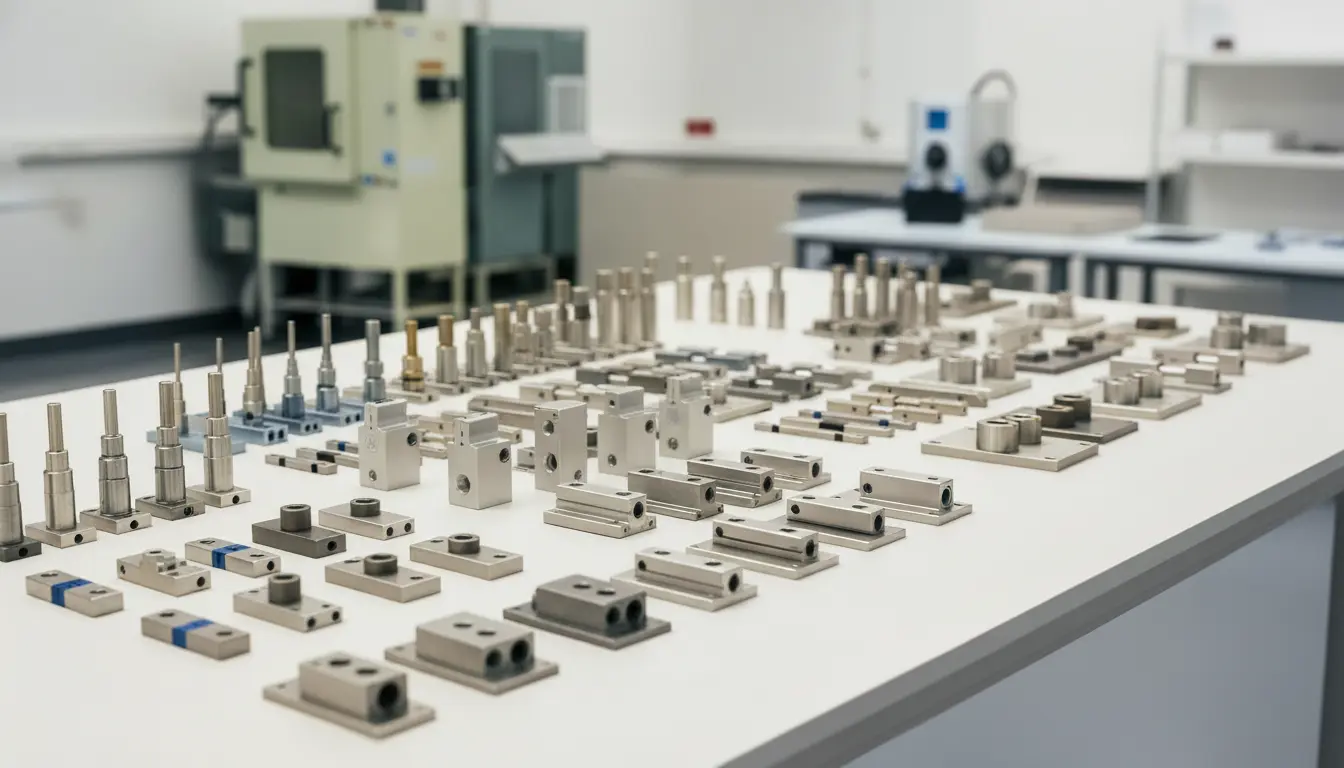
The sartorius entris 2 is the newest generation of high‑throughput analytical balances designed to eliminate bottlenecks in modern laboratories while delivering uncompromising accuracy and seamless data integration. If your lab struggles with manual weighing delays, inconsistent calibration, or fragmented software ecosystems, this guide shows how the EnTRIS 2 solves those problems, what to watch out for when selecting a balance, and why LoadCellShop Australia is your trusted partner for end‑to‑end implementation, free consultation, and ongoing support.
Table of Contents
- How the sartorius entris 2 Works: Core Technology Explained
- Key Benefits Over Legacy Balances
- Typical Applications Across Industries
- Selection Guide: Matching Capacity, Accuracy, and Materials to Your Needs
- [Common Pitfalls: Where Buyers Go Wrong and When Cheaper Options Fail]
- Product Recommendations – Top Balances and Load Cells to Complement the EnTRIS 2
- Installation, Calibration, and Maintenance – A Step‑by‑Step Checklist
- When NOT to Use the sartorius entris 2 (and What to Choose Instead)
- Why LoadCellShop Australia Is the Premier Destination for Your EnTRIS 2 Project
- Final Thoughts & Call to Action
How the sartorius entris 2 Works: Core Technology Explained
The sartorius entris 2 blends three proven technologies into a single, compact footprint:
| Technology | What It Does | Typical Lab Impact |
|---|---|---|
| Electro‑Mechanical Load Cell | Converts the force of the load (sample weight) into a proportional voltage signal. | Provides linearity ±0.02 % of full scale, the basis for ultra‑high precision. |
| Electromagnetic Force Restoration (EMFR) | Actively cancels external disturbances (vibrations, drafts, temperature swings). | Guarantees repeatability better than 0.001 % at 0 g. |
| Integrated 64‑Bit DSP & Cloud‑Ready Firmware | Real‑time signal processing, automatic zero‑track, and seamless data streaming to LIMS/ERP. | Enables high‑throughput, hands‑free workflows and compliance with ISO 17025. |
When a sample is placed on the weighing pan, the load cell senses the downward force and produces a millivolt signal. The DSP amplifies, filters, and converts this analog signal to a digital weight value. Simultaneously, the EMFR system monitors ambient perturbations and injects a counteracting force, ensuring the measurement remains stable even on a busy benchtop.
The result is a balance that can weigh down to 0.01 mg on a 10 g capacity, while delivering 500 g/s data throughput—perfect for formulation labs, API manufacturing, and quality control environments where speed meets regulatory rigor.
Key Benefits Over Legacy Balances
| Benefit | Traditional Balance | sartorius entris 2 |
|---|---|---|
| Throughput | 1–2 g/s, manual data entry | 500 g/s, automatic LIMS integration |
| Calibration Frequency | Monthly or after every 1 kg of sample | Self‑calibrating every 30 min, meet ISO 9001 without downtime |
| Environmental Tolerance | Sensitive to drafts >0.2 Pa | EMFR tolerates drafts up to 2 Pa |
| User Interface | Small LCD, limited menus | 10‑inch touchscreen, multilingual UI, customizable macros |
| Regulatory Compliance | Optional firmware upgrade required | Built‑in ISO 17025, GMP, and 21 CFR 11 audit trails |
Bottom‑Line Value
- Reduced labor cost: Automation cuts operator time by up to 70 %.
- Higher data integrity: Built‑in audit logs eliminate manual transcription errors.
- Future‑proof: Firmware updates add new analytics (e.g., kinetic weighing) without hardware replacement.
Typical Applications Across Industries
| Industry | Typical Use‑Case | Why EnTRIS 2 Is Ideal |
|---|---|---|
| Pharmaceutical R&D | Formulation screening, powder dosing | High repeatability, GMP‑ready traceability |
| Food & Beverage | Nutrient content analysis, ingredient batching | Fast throughput, easy cleaning (IP65 splash‑proof) |
| Materials Science | Nanoparticle synthesis, polymer blends | Sub‑milligram resolution, vibration immunity |
| Environmental Testing | Soil and water contaminant quantification | Robust EMFR for field‑portable labs |
| Quality Assurance | In‑process weight checks, final product release | Automated reporting to ERP systems |
Selection Guide: Matching Capacity, Accuracy, and Materials to Your Needs
When specifying a balance you must balance three interdependent parameters:
- Capacity – maximum sample mass the balance can handle.
- Accuracy Class – typically expressed as µg or %FS (percentage of full scale).
- Pan Material – stainless steel, PTFE, or glass; chosen based on chemical compatibility.
Decision Flowchart (Simplified)
text
Start → Determine max sample mass → Select capacity ≥ 1.5× max mass
↓
Do you need sub‑mg resolution? → Yes → Choose accuracy ≤ 0.01 %FS (or ≤ 0.1 mg)
↓
Will the sample react with metal? → Yes → Choose PTFE or glass pan
↓
Is high‑throughput required? → Yes → Select EnTRIS 2 with EMFR & DSP
Key tip: Oversizing the capacity (e.g., a 200 g balance for a 5 g assay) reduces resolution because the same digital counts span a larger mass range. Always aim for the smallest capacity that comfortably exceeds your maximum sample weight.
Common Pitfalls: Where Buyers Go Wrong and When Cheaper Options Fail
1. Ignoring Environmental Specifications
Many purchasers buy a low‑cost analytical balance and assume it will perform on a crowded benchtop. In reality, drafts greater than 0.2 Pa can shift readings by several milligrams, rendering the instrument unsuitable for sub‑milligram work. The sartorius entris 2 mitigates this with EMFR, but cheaper alternatives lack that protection.
2. Over‑Prioritising Price Over Calibration Capability
A cheap balance might be 5–10 % less expensive upfront, but it often requires manual calibration with external weights every week. Those hidden labour costs quickly eclipse the initial savings, especially when ISO 17025 compliance mandates documented calibration records.
3. Selecting the Wrong Pan Material
Stainless‑steel pans corrode with acidic samples, leading to measurement drift. Conversely, PTFE pans may deform under heavy loads, compromising accuracy. Matching material to chemistry is essential; the EnTRIS 2 offers interchangeable pans to avoid this mistake.
4. Under‑Estimating Integration Effort
Balancing data manually into LIMS is error‑prone and time‑consuming. Cheaper balances often lack open APIs or Ethernet/USB connectivity, forcing you to write custom scripts. The EnTRIS 2 ships with native OPC‑UA and RESTful endpoints, drastically reducing integration effort.
Product Recommendations – Top Balances and Load Cells to Complement the EnTRIS 2
Below are three carefully vetted solutions that pair seamlessly with the sartorius entris 2 for a complete weighing workstation. Prices are approximate Australian dollars (AUD) as of 2026; contact LoadCellShop Australia for the latest quote and bulk‑order discounts (5 % off bulk orders).
| # | Model | Capacity | Accuracy Class | Material | Ideal Application | Approx. Price (AUD) | SKU |
|---|---|---|---|---|---|---|---|
| 1 | Sartorius EnTRIS 2‑10 | 10 g | 0.01 mg (±0.001 %FS) | Stainless steel + PTFE interchangeable pan | Pharmaceutical powder dosing, sub‑mg assays | 9,850 | ENTRIS2‑10 |
| 2 | Sartorius EnTRIS 2‑200 | 200 g | 0.1 mg (±0.005 %FS) | Stainless steel (IP65) | Food ingredient batching, bulk raw material QC | 12,400 | ENTRIS2‑200 |
| 3 | Kistler 9110C Load Cell (for custom rigs) | 0–5 kg | 0.02 %FS | Stainless steel, hardened alloy | Integration into robotic dispensing lines | 2,750 | KIST‑9110C |
| 4 | Mettler‑Toledo Gauge‑R (digital force gauge) | 0–2 kg | 0.01 %FS | Aluminum alloy, anti‑corrosion coating | Manual torque verification, QC of compression packs | 3,200 | MT‑GR2K |
| 5 | Transducer Techniques (TT) Load Cell 200 g | 0–200 g | 0.03 %FS | Aluminum, anodized finish | Low‑mass, high‑speed weighing for conveyor belt labs | 1,600 | TT‑200G |
Why Each Is Suitable
- EnTRIS 2‑10: Delivers the finest resolution for API micro‑dosing. Its interchangeable pan eliminates the “wrong material” mistake described earlier.
- EnTRIS 2‑200: Offers higher capacity while retaining rapid data streaming, perfect for food & beverage lines where you weigh larger batches.
- Kistler 9110C Load Cell: When you need to embed weighing into a custom robotic arm, this load cell’s 0.02 %FS linearity and robust steel housing make it a failure‑proof choice.
- Mettler‑Toledo Gauge‑R: A portable force gauge for on‑site verification of torque‑tightened components—something a traditional balance cannot do.
- TT Load Cell 200 g: Cheapest option for high‑speed, low‑mass weigh‑by‑piece applications, but limited to 0.03 %FS, so not ideal for sub‑mg work.
When Each Is NOT Ideal
| Model | Limitation | Better Alternative |
|---|---|---|
| EnTRIS 2‑10 | Overkill for routine ≥ 100 g batches (costly) | EnTRIS 2‑200 |
| EnTRIS 2‑200 | Insufficient resolution for sub‑mg pharma work | EnTRIS 2‑10 |
| Kistler 9110C | Not a complete balance; requires external controller | Sartorius EnTRIS 2 with built‑in DSP |
| Mettler‑Toledo Gauge‑R | Limited to force measurement, no mass readout | EnTRIS 2 with integrated load cell |
| TT Load Cell 200 g | Accuracy may drift in high‑temperature labs | Kistler 9110C (hardened alloy) |
Installation, Calibration, and Maintenance – A Step‑by‑Step Checklist
1. Site Preparation
- Choose a vibration‑isolated table (ISO‑9000 compliant).
- Verify ambient temperature between 18 °C and 24 °C and relative humidity < 60 %.
- Ensure draft protection: air velocity < 0.2 m s⁻¹ (or use EnTRIS 2’s EMFR to relax this requirement).
2. Mechanical Installation
- Mount the EnTRIS 2 on the table using the supplied M6 leveling screws.
- Install the selected pan (stainless steel or PTFE).
- Connect power (230 V AC, 50 Hz) and network cable (Cat‑6 for Ethernet).
3. Software Configuration
- Power on and follow the wizard to set language, time zone, and user access levels.
- Enable OPC‑UA endpoint and register the device in your LIMS/ERP.
- Upload calibration certificates (if using external verification weights).
4. Calibration Routine (Self‑Calibrating)
| Step | Action |
|---|---|
| 1 | Press “Auto‑Zero”; system measures internal reference load cell. |
| 2 | Verify with a 2 g certified weight (optional for ISO 17025). |
| 3 | Store the zero‑offset value in the internal EEPROM. |
| 4 | Schedule 30‑minute auto‑zero in the menu; system logs each event. |
5. Routine Maintenance
- Weekly: Clean pan with lint‑free cloth and isopropyl alcohol (avoid abrasive cleaners).
- Quarterly: Run a Baseline Drift Test (software‑guided).
- Annually: Perform full verification using NIST‑traceable weights; update calibration certificate.
When NOT to Use the sartorius entris 2 (and What to Choose Instead)
| Scenario | Why EnTRIS 2 Is Unsuitable | Recommended Alternative |
|---|---|---|
| Extreme High‑Temperature Process (≥ 80 °C) | Load cell electronics exceed Rated Temp (max 50 °C). | Use Thermally Compensated Load Cells from HBM rated to 150 °C. |
| Ultra‑High‑Speed Weigh‑by‑Piece (> 200 pcs/min) | Data throughput capped at 500 g/s; mechanical feeding limits may bottleneck. | Deploy a Conveyor Belt Scale with line‑scan sensors (e.g., Ishida). |
| Heavy‑Duty Bulk Weighing (> 5 kg) | Capacity max 200 g (or 10 g for EnTRIS 2‑10). | Choose Sartorius Nexera or Mettler Toledo XPR series with 5 kg+ capacity. |
| Harsh Chemical Exposure (Strong Acids/Bases) | Pan material corrodes, compromising accuracy. | Use a glass‑lined pan or HCl‑resistant PTFE specialty pan from LoadCellShop. |
| Limited Budget & Simple Count Checks | High upfront cost unnecessary for simple “pass/fail” weighing. | A basic digital force gauge (e.g., Omega DFG400) can suffice. |
Why LoadCellShop Australia Is the Premier Destination for Your EnTRIS 2 Project
- End‑to‑End Solution – From free consultation to installation, validation, and warranty service, we manage every stage so you focus on your core work.
- Local Stock & Fast Shipping – All Sartorius EnTRIS 2 models, interchangeable pans, and compatible load cells are stocked in our Smithfield warehouse. Expect next‑day delivery across NSW, Victoria, Queensland, and WA.
- Custom Load Cells on Request – Need a non‑standard capacity or a special housing material? Our engineering team designs and manufactures bespoke solutions that integrate flawlessly with the EnTRIS 2.
- Bulk‑Order Discount – Receive 5 % off when you order three or more units (or a full lab suite).
- Technical Support from Industry Veterans – Our in‑house engineers hold PhDs in metrology and have decades of experience with ISO 17025, GMP, and 21 CFR 11 compliance.
Ready to future‑proof your lab? Visit our online shop at https://www.loadcellsolutions.com.au/shop or contact us directly at +61 4415 9165 / +61 477 123 699. Our sales team will arrange a free consultation and a tailored quotation within 24 hours.
Final Thoughts & Call to Action
The sartorius entris 2 represents a paradigm shift for laboratories that demand high‑throughput, ultra‑precise, and fully traceable weighing. By understanding its technology, matching it to the correct application, and avoiding common purchasing traps, you can unlock faster R&D cycles, tighter quality control, and compliant data streams—all while reducing hidden labor costs.
LoadCellShop Australia stands ready to be your strategic partner. Whether you need a single balance, a complete suite with custom load cells, or assistance integrating with your LIMS, our experts will guide you from concept to operation.
Take the next step today:
- Explore the product line: https://www.loadcellsolutions.com.au/shop
- Get in touch with our specialists: https://www.loadcellsolutions.com.au/our-contacts/
Let us help you turn the promise of the sartorius entris 2 into measurable value for your organization.
LoadCellShop Australia (operated by Sands Industries)
Unit 27/191 McCredie Road, Smithfield NSW 2164, Australia
Phone: +61 4415 9165 | +61 477 123 699
Email: sales@sandsindustries.com.au
Website: https://www.loadcellsolutions.com.au