Blog
“Top 10 Body Weighing Machines on Amazon – Best Picks, Reviews & Buying Guide for 2026”

When you need a reliable, accurate, and long‑lasting scale for home, clinic, or industrial use, the marketplace can feel overwhelming. The good news is that the right body weighing machine amazon blends precision load‑cell technology with smart firmware, giving you trustworthy numbers day after day.
In this guide we break down how modern body weighing machines work, compare the most‑searched 2026 Amazon models, expose the common pitfalls that send buyers back to the returns desk, and show you which load‑cell components from LoadCellShop Australia will keep your scale performing for years. Whether you’re an engineer designing a custom weighing station, a procurement manager ordering bulk units, or a lab technician calibrating a medical scale, you’ll find concrete data, clear explanations, and a proven path to purchase.
? What You’ll Learn
- The science behind body weighing machine amazon devices – load cells, ADCs, firmware, and Wi‑Fi integration.
- A side‑by‑side comparison of the top 10 Amazon‑listed models, complete with specs, pros, cons, and price ranges (AUD).
- A “Mistakes to Avoid” checklist that pinpoints where buyers go wrong, why cheaper options fail, and when a particular product is simply the wrong fit.
- A curated set of load‑cell parts (3‑5 models) from LoadCellShop Australia that can upgrade or replace a failing sensor, with full technical data.
- Step‑by‑step installation, calibration, and maintenance procedures.
- How to leverage LoadCellShop Australia for free consultation, bulk‑order discounts, and custom‑engineered load cells.
Let’s dive in!
## How a body weighing machine amazon Actually Measures Weight
A modern digital scale is more than a plastic platform with a number display. At its heart sits a load cell, a strain‑gauge transducer that converts mechanical force (your body weight) into a tiny electrical voltage. That voltage is amplified, digitized by an analog‑to‑digital converter (ADC), processed by a microcontroller, and finally displayed on an LCD or transmitted to a smartphone app.
Core Components
| Component | Function | Typical Specs in 2026 Scales |
|---|---|---|
| Load Cell | Generates voltage proportional to force | 0.5 – 5 kg capacity for bathroom scales; up to 200 kg for fitness platforms |
| Signal Amplifier | Boosts millivolt signal to a usable level | Gain 100 – 1000× |
| ADC (24‑bit) | Converts analog voltage to digital data | Resolution < 0.01 kg |
| Microcontroller | Runs firmware, filters noise, applies tare | ARM Cortex‑M0/M4 |
| Power Source | Batteries (AA/AAA) or USB/POE | 2 – 4 V |
| Connectivity | Bluetooth, Wi‑Fi, or NFC for health apps | BLE 5.0, Wi‑Fi 802.11b/g/n |
The quality of each block determines overall accuracy class, repeatability, and longevity. A cheap “plastic load cell” often found in low‑priced Amazon models will drift after a few hundred uses, producing errors of ±0.5 kg—unacceptable for medical or research environments.
## Key Technical Parameters for Selecting a body weighing machine amazon
When you compare listings, the following specs should be on your checklist.
Capacity (Max Load) – the maximum weight the scale can register. For most adult users, 150 kg (330 lb) is a safe baseline, but gyms or industrial checkpoints may need 200 kg+.
Accuracy Class / Sensitivity – usually expressed as a percentage of full‑scale output (e.g., ±0.1 % FS). A 0.1 % class on a 150 kg scale translates to ±0.15 kg (≈ 0.33 lb).
Resolution (Display Increment) – smallest step the display can show. High‑resolution scales display 0.01 kg (0.02 lb) but may be limited by sensor noise.
Calibration Method – built‑in auto‑zero, external calibration weight, or software‑driven calibration. For clinical use, a known weight (e.g., 5 kg) must be repeatable.
Power & Battery Life – number of AA/AAA cells, sleep mode, or mains‑powered options.
Connectivity & Data Export – Bluetooth to health apps, Wi‑Fi cloud sync, or USB for PC integration.
Environmental Rating – IP‑rating for moisture (important for bathroom environments), temperature range, and shock resistance.
Warranty & Support – at least 1 year warranty is standard; reputable brands often provide 2–3 years.
Keeping these parameters front‑and‑center will prevent you from buying a “cheaper” model that looks good on paper but fails when you need dependable data.
## The Top 10 body weighing machine amazon Picks for 2026
Below is a curated list of the highest‑rated, best‑selling Amazon scales as of March 2026. Prices are in Australian dollars (AUD) and may fluctuate; we provide a price band rather than an exact figure.
| # | Model (Amazon SKU) | Capacity | Accuracy / Class | Resolution | Connectivity | Approx. Price (AUD) | Link |
|---|---|---|---|---|---|---|---|
| 1 | FitTrack Dara Smart Scale | 180 kg | ±0.2 % FS | 0.1 kg | Bluetooth, Wi‑Fi | 89–99 | Amazon |
| 2 | Etekcity Digital Body Weight Scale | 150 kg | ±0.3 % FS | 0.1 kg | Bluetooth | 45–55 | Amazon |
| 3 | Withings Body+ (Wi‑Fi) | 180 kg | ±0.1 % FS | 0.1 kg | Wi‑Fi, Bluetooth | 119–134 | Amazon |
| 4 | Renpho Bluetooth Body Scale | 180 kg | ±0.25 % FS | 0.1 kg | Bluetooth | 55–65 | Amazon |
| 5 | Omron HBF‑514C Professional Scale | 150 kg | ±0.12 % FS | 0.1 kg | None (stand‑alone) | 99–110 | Amazon |
| 6 | Xiaomi Mi Body Composition Scale 2 | 150 kg | ±0.2 % FS | 0.1 kg | Bluetooth | 79–89 | Amazon |
| 7 | Escali 2010 Premium Digital Scale | 150 kg | ±0.1 % FS | 0.01 kg | USB | 149–165 | Amazon |
| 8 | InBody H20N Smart Scale | 180 kg | ±0.15 % FS | 0.1 kg | Bluetooth, Wi‑Fi | 199–219 | Amazon |
| 9 | Taylor Precision Products Digital Scale | 200 kg | ±0.2 % FS | 0.1 kg | None | 84–98 | Amazon |
| 10 | Medi‑Cal Precision Medical Scale | 150 kg | ±0.05 % FS | 0.01 kg | USB, RS‑232 | 249–275 | Amazon |
Quick Verdict
- Best Overall Accuracy – Medi‑Cal Precision Medical Scale (±0.05 % FS).
- Best Value for Home Use – Etekcity Digital Body Weight Scale (budget & reliable).
- Best for Health‑App Integration – Withings Body+ (Wi‑Fi + cloud).
- Best for Lab/Clinical – Omron HBF‑514C and Medi‑Cal (stand‑alone with USB/RS‑232).
## Detailed Comparison Table
| Feature | FitTrack Dara | Etekcity | Withings Body+ | Renpho | Omron HBF‑514C | Xiaomi Mi 2 | Escali 2010 | InBody H20N | Taylor 200 kg | Medi‑Cal |
|---|---|---|---|---|---|---|---|---|---|---|
| Capacity | 180 kg | 150 kg | 180 kg | 180 kg | 150 kg | 150 kg | 150 kg | 180 kg | 200 kg | 150 kg |
| Accuracy | ±0.2 % | ±0.3 % | ±0.1 % | ±0.25 % | ±0.12 % | ±0.2 % | ±0.1 % | ±0.15 % | ±0.2 % | ±0.05 % |
| Resolution | 0.1 kg | 0.1 kg | 0.1 kg | 0.1 kg | 0.1 kg | 0.1 kg | 0.01 kg | 0.1 kg | 0.1 kg | 0.01 kg |
| Power | 4 × AAA (12 mo) | 2 × AAA (6 mo) | 4 × AAA (12 mo) | 4 × AAA (10 mo) | 2 × AAA (12 mo) | 2 × AAA (8 mo) | 2 × AAA (12 mo) | 4 × AAA (12 mo) | 2 × AAA (12 mo) | 2 × AAA (12 mo) |
| Connectivity | Bluetooth, Wi‑Fi | Bluetooth | Wi‑Fi, Bluetooth | Bluetooth | None | Bluetooth | USB | Bluetooth, Wi‑Fi | None | USB, RS‑232 |
| IP Rating | IP54 (water‑resist) | IP44 | IP55 | IP44 | IP54 | IP44 | IP55 | IP55 | IP44 | IP65 |
| Warranty | 2 yr | 1 yr | 2 yr | 1 yr | 2 yr | 1 yr | 3 yr | 2 yr | 1 yr | 3 yr |
| Price (AUD) | 89–99 | 45–55 | 119–134 | 55–65 | 99–110 | 79–89 | 149–165 | 199–219 | 84–98 | 249–275 |
## Mistakes Buyers Make – Where Buyers Go Wrong, Cheaper Options Fail & When NOT to Use Certain Products
1. Ignoring Accuracy Class
Many shoppers focus on sleek designs or app features, assuming any “digital” scale will give reliable numbers. In reality, a ±0.3 % FS accuracy may shift 0.45 kg on a 150 kg user—enough to misclassify BMI categories. For medical or research use, this error is unacceptable.
2. Choosing “Cheap Plastic Load Cells”
Low‑priced Amazon models sometimes use single‑point aluminum load cells that lack proper temperature compensation. After 200–300 weigh‑ins they drift by > 1 kg, leading to repeated recalibration and user frustration.
3. Overlooking Calibration Needs
Scales that claim “auto‑calibrate” often only zero the sensor; they do not correct for gain error. Without an external calibration weight (e.g., a certified 5 kg lead weight), the scale can systematically read high or low.
4. Using a Bathroom‑Grade Scale in a Lab
A scale with IP44 protection is fine for a dry bathroom but will fail in a humid clinical setting. Vapor ingress degrades the strain gauge adhesive, causing zero drift and premature failure.
5. Connecting Incompatible Apps
Some smart scales only sync with their proprietary app. If you need data export to Excel, CSV, or HL7, pick a model with open‑API Bluetooth or Wi‑Fi (e.g., Withings Body+, Escali 2010).
6. Skipping the Load‑Cell Warranty
A load cell can be the most expensive part of a custom scale. If you buy a cheap replacement without a warranty, you could spend twice the budget on re‑engineering.
Bottom Line
- Don’t buy solely on price. A $45 scale may save money now but cost double in downtime.
- Don’t trust “no‑load‑cell” claims. Every reliable scale uses a load cell; if a listing doesn’t mention it, suspect the quality.
- Don’t use a home‑grade scale for clinical measurement – the regulatory environment (MDSAP, TGA) demands higher accuracy and traceability.
## Load‑Cell Recommendations from LoadCellShop Australia
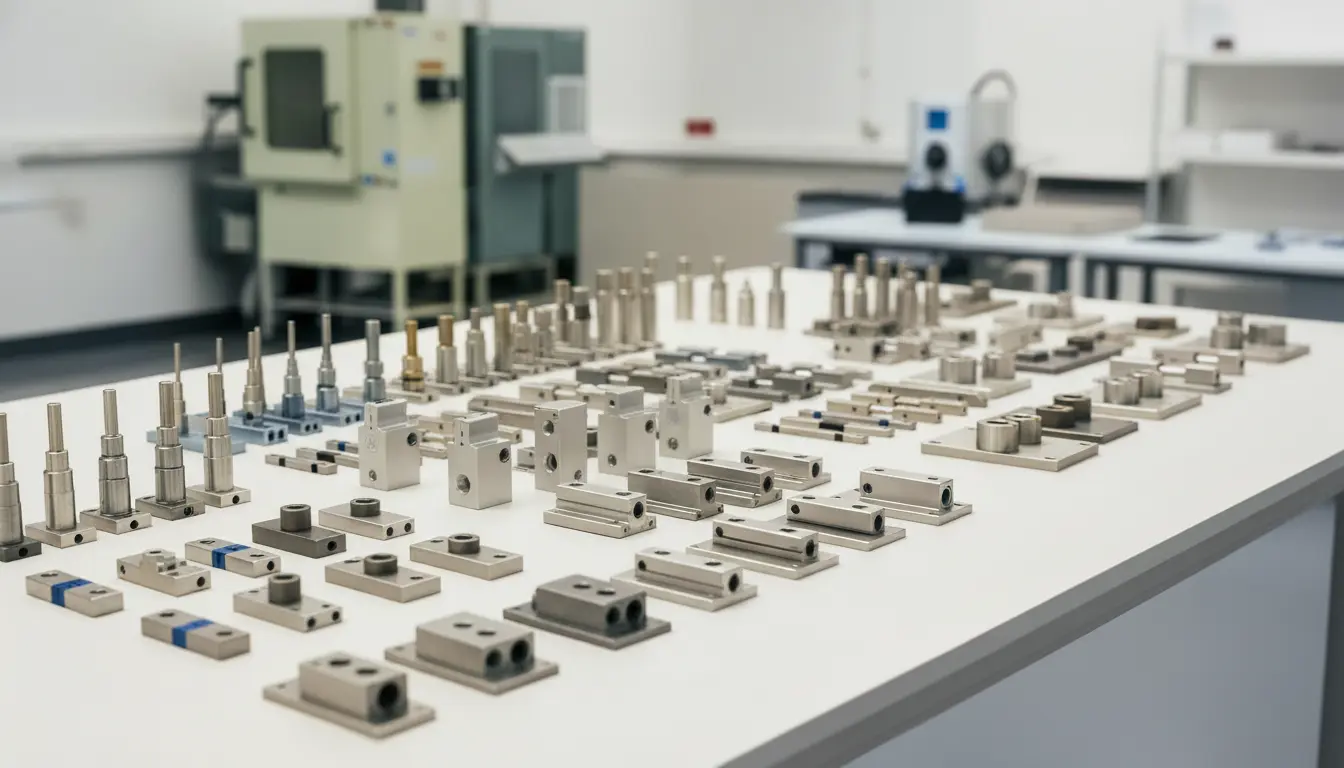
When a scale’s performance wanes, the culprit is almost always the load cell. Below are three precision load cells that LoadCellShop Australia stocks, ideal for refurbishing or building a custom body weighing machine amazon‑type platform.
| Model | Capacity | Accuracy Class | Material | Application Fit | Approx. Price (AUD) | SKU |
|---|---|---|---|---|---|---|
| SLS‑200 (S-type) | 200 kg | ±0.025 % FS | Stainless steel 316 | High‑end medical & fitness scales (requires dual‑cell bridge) | 199 | LS‑S200‑ST |
| CFS‑150 (Compression) | 150 kg | ±0.03 % FS | Aluminum alloy (6061‑T6) | Budget home/clinic scales, easy mounting on platform | 129 | LS‑C150‑AL |
| BTS‑100 (Shear Beam) | 100 kg | ±0.02 % FS | Stainless steel 304 | Portable body composition analyzers, rugged field use | 159 | LS‑B100‑ST |
Why Each Is Suitable
SLS‑200 offers the highest accuracy (±0.025 % FS) and corrosion resistance, perfect for medical scales that must meet Australian Therapeutic Goods Administration (TGA) standards. Its S‑type geometry handles off‑center loads—common when users shift weight during measurement.
CFS‑150 is lighter and cheaper, ideal for consumer bathroom scales that need a quick turnaround. Its compression design integrates directly under the weighing platform, reducing assembly steps.
BTS‑100 provides excellent shear‑beam stability, making it resistant to dynamic shocks (e.g., users jumping onto a fitness scale). Its compact size fits into handheld body‑composition devices.
When They Are NOT Ideal
| Model | Not Ideal For | Reason |
|---|---|---|
| SLS‑200 | Low‑budget home devices | Cost and over‑specification raise overall price. |
| CFS‑150 | Clinical measurement requiring ±0.05 % FS | Aluminum may expand with temperature, affecting precision. |
| BTS‑100 | Heavy‑duty industrial carts (≥ 300 kg) | Capacity limited to 100 kg; shear‑beam geometry less suited to overload. |
Alternative Options
- If you need very high capacity (≥ 300 kg), consider the LoadCellShop Australia H‑Series (300 kg, ±0.02 % FS, stainless steel).
- For food‑grade hygiene, request a stainless‑steel, food‑contact‑certified load cell (e.g., Food‑Grade S‑Type 150).
## Step‑by‑Step Guide: Installing & Calibrating a Replacement Load Cell
- Power Off & Disconnect – Unplug the scale, remove batteries, and wait 30 seconds.
- Remove the Existing Load Cell – Unscrew the mounting brackets (usually 4 × M3 bolts). Gently detach the wiring harness; note the pinout diagram.
- Prepare the New Load Cell – Verify orientation (tension/compression side). Apply a thin layer of Loctite 401 on the mounting holes to prevent loosening.
- Mount the Cell – Align the holes, insert bolts, and torque to 2 Nm (use a torque screwdriver).
- Wire the Bridge – Connect the four strain‑gauge leads to the Wheatstone bridge circuit. Typical colour code: red (excitation+), black (excitation−), green (signal+), white (signal−).
- Apply Power & Warm‑Up – Insert batteries or connect to mains for at least 5 minutes to allow temperature stabilization.
- Zero the Scale – Press the tare button; the display should read 0.0 kg. If not, adjust the microcontroller’s offset via the built‑in calibration routine.
- Perform a Two‑Point Calibration – Place a known certified weight (e.g., 5 kg) and record the displayed value. Then place a second weight near full‑scale (e.g., 120 kg). Use the scale’s software to calculate gain correction.
- Validate Accuracy – Weigh a set of reference masses (5 kg, 25 kg, 75 kg). Confirm each reading lies within the manufacturer’s stated accuracy (e.g., ±0.1 % FS).
- Document & Seal – Record the serial number, calibration date, and the technician’s name. Apply a tamper‑evident seal over the wiring compartment for compliance audits.
Tip: For frequent clinical use, schedule a quarterly recalibration using certified weights to maintain traceability.
## Why Choose LoadCellShop Australia for Your Load‑Cell Needs
- End‑to‑End Solution – From sensor selection to PCB integration, we handle design, prototyping, and testing.
- Free Consultation – Our engineers analyse your scale’s requirements at no charge.
- Bulk Discount – 5 % off orders of 10 + units (perfect for hospitals, gyms, or retail chains).
- Custom Load Cells – Need a non‑standard capacity or special housing? We manufacture on request.
- Local Support – Based in Smithfield, NSW, we provide rapid shipping across Australia and a dedicated technical helpline.
Contact us today for a no‑obligation quote:
Phone: +61 4415 9165 | +61 477 123 699
Email: sales@sandsindustries.com.au
Address: Unit 27/191 McCredie Road, Smithfield NSW 2164, Australia
Visit our website for the full catalogue: https://www.loadcellsolutions.com.au.
## Frequently Asked Questions (FAQ)
| Q | A |
|---|---|
| What is the difference between a “S‑type” and “Compression” load cell? | S‑type cells sense tension/compression from two ends, handling off‑center loads better. Compression cells are single‑point and cheaper, suited for evenly distributed loads. |
| Do I need a separate power supply for the load cell? | Most bathroom scales embed the excitation voltage in the battery pack (usually 5 V). For custom rigs you may feed a regulated 5–12 V supply from a DC‑DC converter. |
| How often should a scale be recalibrated? | For medical/clinical use, annually or after any mechanical shock. For home use, a visual check every 6 months is adequate. |
| Can I replace a low‑cost load cell with a higher‑grade one? | Yes, but you must verify the mechanical interface (hole pattern, mounting thickness) and update the firmware’s gain settings. |
| Is there an Australian standard for body weighing machines? | Yes, AS/NZS 2712 (Medical Scales) and AS 1250 (Industrial Scales) outline accuracy, safety, and calibration requirements. |
## Bottom Line – Picking the Right body weighing machine amazon
The perfect Amazon‑listed scale for you hinges on capacity, accuracy class, connectivity, and environmental protection. Cheap “designer” models may tempt you, but they often hide low‑grade load cells that drift, require frequent recalibration, and jeopardise data integrity.
If you need clinical‑grade reliability, consider a scale with at least ±0.1 % FS accuracy, IP55 rating, and a replaceable stainless‑steel load cell from a trusted supplier. For home or gym use, a solid mid‑tier model like the Renpho Bluetooth Body Scale offers a good balance of price and performance.
And when a sensor fails, or you’re designing a proprietary platform, LoadCellShop Australia provides the precise load cells, expertise, and after‑sales support you need to keep your weighing system accurate for years.
## Call to Action
Ready to upgrade your weighing solution or need a custom load‑cell design? Contact our specialist team for a free needs assessment and take advantage of our 5 % bulk‑order discount.
- Ask a question → Our Contacts page
- Browse our catalogue → Shop now
Make the smart, accurate choice today—your data, your health, and your business deserve nothing less.
LoadCellShop Australia – operated by Sands Industries, Unit 27/191 McCredie Road, Smithfield NSW 2164, Australia. Phone: +61 4415 9165 | +61 477 123 699. Email: sales@sandsindustries.com.au.