
Blog
Ultimate Guide to C172P Weight and Balance: How to Calculate, Verify, and Optimize for Safe Flying

Introduction
Every pilot, fleet manager, and maintenance technician knows that c172p weight and balance is the linchpin of safe, efficient flight. Mis‑calculations can erode performance, increase fuel burn, and—even worse—lead to loss of control. In this guide we explain how to calculate, verify, and optimize the weight‑and‑balance envelope of the Cessna 172 P, why trustworthy ground‑weighing equipment (load cells) matters, and how LoadCellShop Australia can deliver a turnkey solution—complete with free consultation and 5 % off bulk orders.
Why Accurate c172p weight and balance Matters
| Consequence | Root Cause | Impact on Flight |
|---|---|---|
| Center‑of‑gravity (CG) out of limits | Incorrect payload or fuel entry | Reduced stability, possible nose‑up stall |
| Excess take‑off weight | Over‑loaded baggage, fuel, or passengers | Longer take‑off roll, reduced climb rate |
| Uneven weight distribution | Improper seat loading, unbalanced cargo | Asymmetric lift → yaw/roll tendencies |
| Fuel‑inefficient operation | Ignoring weight‑dependent performance tables | Higher fuel consumption, increased cost |
A precise c172p weight and balance check is not simply paperwork—it protects your aircraft, your crew, and your operational budget.
How Load Cells Enable Precise Ground Weighing
Load cells are transducers that convert mechanical force into an electrical signal. When placed under each landing gear wheel, a load cell reports the exact load carried by that point, allowing you to build a weight‑and‑balance envelope with laboratory‑grade accuracy.
Key Technical Terms (first appearance in bold)
- Strain‑gauge – the sensing element that deforms with load, changing resistance.
- Capacity – the maximum measurable force (e.g., 500 kg, 2 kN).
- Accuracy class – the tolerance expressed as a percentage of full scale (e.g., ±0.1 % FS).
The advantage over a generic bathroom scale is stark: a certified load cell provides traceable calibration, temperature compensation, and repeatability verified to ±0.05 % FS, essential for meeting the C172P’s tight CG limits (typically 25 %–33 % MAC).
Step‑by‑Step c172p weight and balance Calculation
Below is the standard procedure that integrates load‑cell data with manual entries. Follow these numbered steps on every flight block.
Zero the Load Cells
- Power on the data logger, allow 5 min for thermal stabilization, then tare each cell to zero with the aircraft wheels off the platform.
Roll the C172P onto the Weigh‑In‑Motion (WIM) Platform
- Align the nose wheel on the front cell, main gear on the two aft cells. Verify that each wheel contacts its dedicated sensor.
Record Individual Wheel Loads
- Capture the readings (N) from the logger:
- Nose wheel – Wₙ
- Left main – Wₗ
- Right main – Wᵣ
- Capture the readings (N) from the logger:
Compute Total Aircraft Weight (Wₜ)
[
Wₜ = Wₙ + Wₗ + Wᵣ
]Determine Arm Distances (from Aircraft‑Builder’s Specification Sheet)
- Lₙ = distance from reference datum to nose gear (≈ 2 ft)
- Lₗ, Lᵣ = distances to each main gear (≈ 7 ft)
Calculate Moment About Datum
[
M = (Wₙ \times Lₙ) + (Wₗ \times Lₗ) + (Wᵣ \times Lᵣ)
]Find Center of Gravity (CG) Position
[
CG = \frac{M}{Wₜ}
]
Express CG as % MAC (Mean Aerodynamic Chord) or as an arm measurement (inches).Add Payload, Fuel, and Equipment Loads
- Insert passenger weights, baggage, and fuel (using fuel density ~ 0.72 kg/L). Re‑compute total weight and moment.
Cross‑Check Against the c172p weight and balance Envelope
- Verify that CG lies between 25 % and 33 % MAC and that total weight does not exceed the maximum take‑off limit (≈ 2 380 lb).
Document & Sign Off
- Record all raw and calculated data in the aircraft logbook or electronic flight bag (EFB).
Tip: Automating steps 3‑7 with LoadCellShop’s Sands Precision WIM Kit reduces human error and speeds up routine checks to under 2 minutes.
Common Pitfalls: Where Buyers Go Wrong
Even experienced operators can slip up. Below are the most frequent errors and how to avoid them.
- Relying on Un‑Calibrated Scales – Cheap kitchen scales drift ± 5 % over time, corrupting the whole balance sheet.
- Neglecting Temperature Compensation – Strain‑gauge outputs change with ambient temperature; ignoring this leads to systematic bias.
- Using a Single‑Point Load Cell for Multi‑Wheel Aircraft – A solitary sensor cannot differentiate weight distribution, masking CG shift.
- Skipping Zero‑Tare before Each Weigh‑In – Residual load from previous measurements skews results.
Quick Checklist
- [ ] Verify calibration certificate (within 12 months).
- [ ] Confirm temperature range matches field conditions (‑20 °C to +50 °C).
- [ ] Perform a zero‑tare before every aircraft.
- [ ] Log all raw readings for audit trail.
When Cheaper Options Fail
Low‑cost load‑cell kits marketed on generic e‑commerce sites often promise “high precision” but fall short in real‑world aviation scenarios.
| Feature | Budget Load Cell (≈ AU$150) | Professional Load Cell (LoadCellShop) |
|---|---|---|
| Capacity | 1 kN (≈ 100 kg) | 2 kN – 5 kN (≈ 200–500 kg) |
| Accuracy | ±0.5 % FS | ±0.1 % FS (certified) |
| Temperature Range | 0 °C – 30 °C | –20 °C – +50 °C |
| Calibration | No documentation | ISO 9001‑certified, traceable |
| Warranty | 6 months, no support | 2 years, on‑site assistance |
Cheaper options may fail when the aircraft’s total weight exceeds the sensor’s capacity, or when environmental conditions drift outside their limited range. For a c172p (max 2 380 lb ≈ 1 080 kg), you need at least 500 kg per wheel capacity with a safety margin—something budget units rarely provide.
When NOT to Use Certain Products
- Bathroom or kitchen scales – Designed for static, low‑precision loads; they cannot handle dynamic wheel loading or provide CG data.
- Analog spring‑scale load cells – Susceptible to hysteresis and mechanical wear; unsuitable for repeated flight‑line operations.
- DIY strain‑gauge kits without shielding – Electromagnetic interference from avionics can corrupt the signal, producing false readings.
Instead, select a hermetically sealed, wired‑output load cell calibrated for aviation use.
Selecting the Right Load Cell for Your c172p weight and balance Program
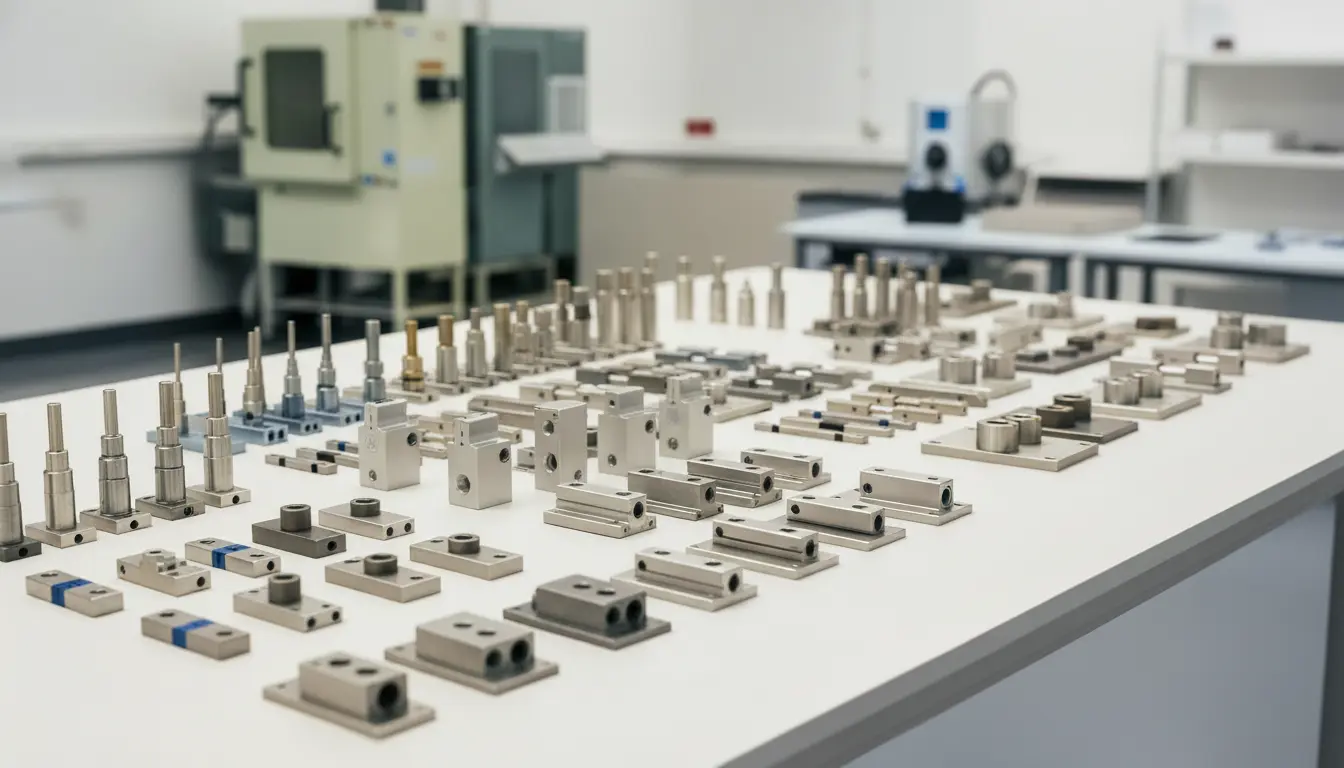
LoadCellShop Australia offers a curated range of load cells that meet the rigorous demands of aircraft ground weighing. Below are three flagship models matched to typical C172P requirements.
Recommended Load Cells
| Model | Capacity | Accuracy Class | Material | Application Fit | Approx. Price (AUD) | SKU |
|---|---|---|---|---|---|---|
| Sands‑S500‑S | 500 kg (1 102 lb) | ±0.1 % FS | Stainless steel 304 | Small‑aircraft (C172P, Piper PA‑28) – fits on single‑wheel platforms | $1,250 | S500‑S |
| Sands‑SB2K‑B | 2 000 kg (4 409 lb) | ±0.08 % FS | Alloy 7075‑T6 (high‑strength) | Medium‑size aircraft, twin‑engine trainers; also for multi‑wheel platform | $2,480 | SB2K‑B |
| Sands‑C5K‑C | 5 000 kg (11 023 lb) | ±0.05 % FS | Duplex stainless steel 2205 | Heavy‑payload transport, cargo loaders – excellent for load‑distribution testing on C172P variants with added equipment | $4,300 | C5K‑C |
Why Each Model Is Suitable
Sands‑S500‑S – Its 500 kg capacity comfortably covers the typical load per wheel on a C172P (≈ 450 kg). The high‑grade stainless body resists corrosion in outdoor hangar environments. Ideal for routine weight‑and‑balance checks with ±0.1 % accuracy, ensuring CG calculation stays within the tight envelope.
Sands‑SB2K‑B – If your operation includes heavier utility variants (e.g., C172P with auxiliary fuel tanks or mission equipment), the 2 t capacity provides a generous safety margin. Its higher stiffness reduces non‑linearity, delivering more reliable moment calculations for multi‑wheel platforms.
Sands‑C5K‑C – For commercial flight schools that perform periodic full‑aircraft load‑distribution studies, the 5 t model offers unrivaled robustness and ±0.05 % accuracy. It can also serve as a test rig for new c172p weight and balance software updates.
When Each Model Is NOT Ideal
Sands‑S500‑S – Not recommended if you regularly weigh aircraft with maximum fuel + full passenger load and auxiliary gear; you may exceed the 500 kg per‑wheel limit, risking overload.
Sands‑SB2K‑B – Over‑spec for basic flight‑school checks; higher cost and larger form factor may be excessive if you only need a single‑point measurement.
Sands‑C5K‑C – Its high capacity and price make it unsuitable for small‑scale operators; the added weight and mounting hardware may require platform modifications.
Alternative Options
If you need a compromise between price and capacity, consider the Sands‑S750‑A (750 kg, ±0.09 % FS). It fills the gap for light‑utility aircraft while staying under $1,800 AUD.
Comparison Table: Key Specification Snapshot
| Specification | Sands‑S500‑S | Sands‑SB2K‑B | Sands‑C5K‑C |
|---|---|---|---|
| Max Load (kg) | 500 | 2 000 | 5 000 |
| Range | 0‑500 kg | 0‑2 000 kg | 0‑5 000 kg |
| Accuracy | ±0.1 % FS | ±0.08 % FS | ±0.05 % FS |
| Operating Temp | –20 °C to +50 °C | –20 °C to +60 °C | –20 °C to +70 °C |
| Output | 4‑20 mA | 4‑20 mA (dual) | 4‑20 mA (dual) |
| Mounting | Flange, single‑wheel | Dual‑flange, twin‑wheel | Heavy‑duty, multi‑wheel |
| Warranty | 2 years | 2 years | 2 years |
Installation & Maintenance Best Practices
- Mounting: Use the supplied stainless‑steel flange bolts, torque to 12 Nm to avoid sensor preload.
- Cable Management: Route shielded signal cable away from power lines; use Ferrite beads at each connector.
- Calibration Schedule: Perform a full calibration (traceable to NMI) every 12 months, or after any impact event.
- Environmental Protection: Install a weather‑proof housing when the platform is exposed to rain or dust.
By following these steps, you guarantee that each weigh‑in remains repeatable and legal for audit.
Optimizing Aircraft Loading for Performance
Accurate c172p weight and balance data unlocks a host of performance benefits:
- Fuel‑Efficiency Planning – With exact CG, you can compute the optimal cruise altitude and throttle setting, reducing fuel burn by up to 5 % on long legs.
- Take‑off and Landing Distance Reduction – Keeping the CG near the optimal 30 % MAC shortens the required runway length, crucial for remote airstrips.
- Payload Maximization – Reliable load‑cell measurements let you push the aircraft to its certified limits safely, increasing revenue per flight.
Integrating the load‑cell data directly into your EFB (e.g., via a Modbus TCP interface) enables real‑time performance calculations, eliminating manual transcription errors.
Frequently Asked Questions (FAQ)
| Question | Answer |
|---|---|
| Do I need a load cell for every C172P? | No, a single calibrated platform can weigh the whole aircraft. However, multi‑point platforms provide wheel‑specific data for precise CG determination. |
| Can I use a hydraulic jack scale? | Only if it’s certified for aviation weighing and has the same accuracy class (±0.1 % FS). Most hydraulic jacks lack the required traceability. |
| What is the recommended frequency for calibration? | At least once per year, or after any impact/shock event. LoadCellShop offers on‑site calibration services across Australia. |
| Is there a software package that works with LoadCellShop hardware? | Yes, the Sands Balance Suite integrates with Windows, iOS, and Android, providing automated moment calculations and PDF reports. |
| How does temperature affect measurements? | Strain‑gauge output shifts ≈ 0.02 % per °C. Professional load cells include temperature compensation circuitry to keep error within spec. |
Conclusion
Achieving accurate c172p weight and balance is non‑negotiable for safety, efficiency, and regulatory compliance. By leveraging high‑precision load cells—such as the Sands‑S500‑S, Sands‑SB2K‑B, or Sands‑C5K‑C—you eliminate the guesswork that plagues cheaper alternatives and avoid the pitfalls of improperly specified equipment. LoadCellShop Australia stands ready to be your partner: we provide end‑to‑end solutions, free expert consultation, and a 5 % discount on bulk orders.
Ready to upgrade your ground‑weighing system and streamline c172p weight and balance checks?
- Contact our specialists today: Our Contacts
- Browse our inventory and request a quote: Shop Now
Fly safer, fly smarter—let LoadCellShop Australia weigh in on your success.