Blog
VPG Weighing Systems: Boosting Accuracy, Efficiency, and Profitability in Modern Manufacturing

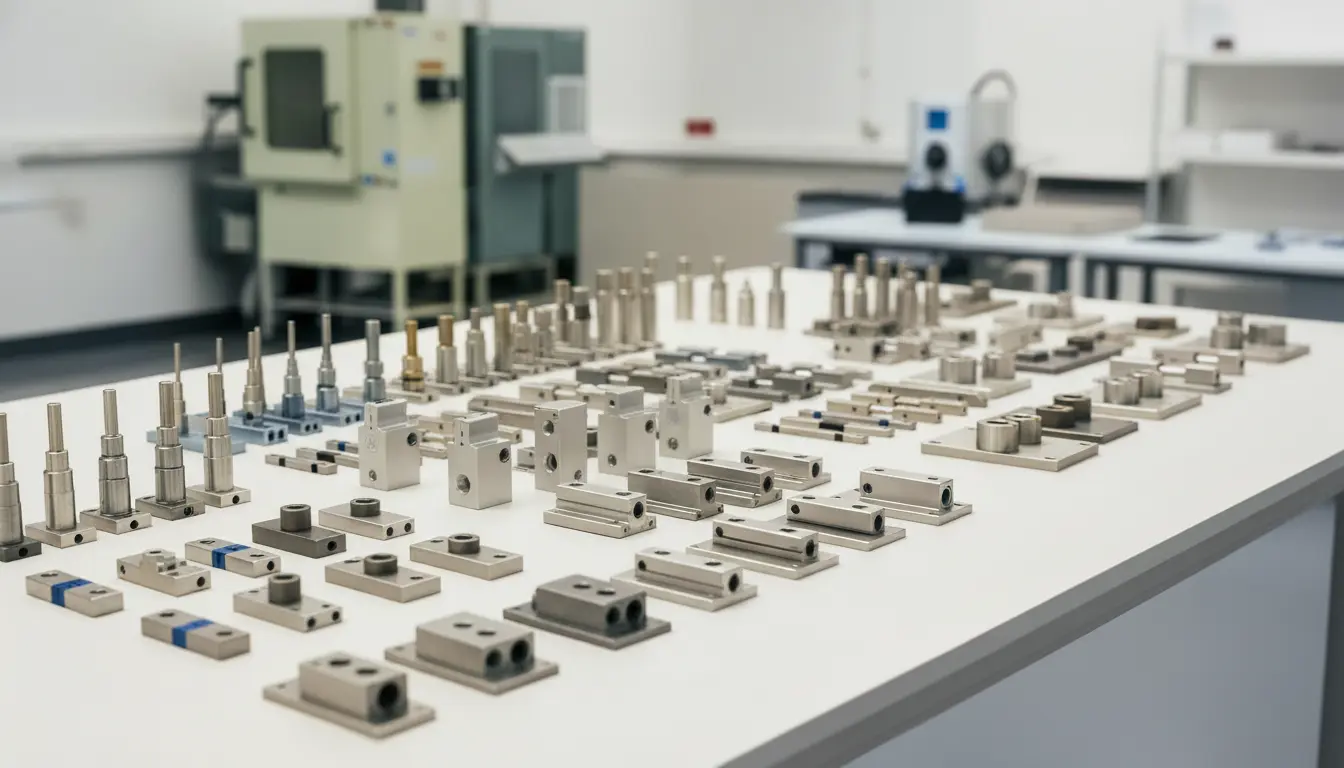
vpg weighing systems have become the silent workhorses behind today’s high‑speed production lines, batch‑mixing rigs, and quality‑control labs. If you’ve ever struggled with inconsistent batch weights, costly re‑work, or missed production targets, you already know why a reliable weighing solution is more than a convenience—it’s a bottom‑line imperative. In this article we’ll dissect the technology, walk you through a practical selection guide, expose the hidden pitfalls many purchasers fall into, and show exactly how LoadCellShop Australia can streamline your purchase with free expert consultation and custom‑cell options.
Introduction
Manufacturers across Australia face mounting pressure to shave waste, meet stricter regulatory tolerances, and deliver products on ever‑tightening schedules. Traditional spring‑scale or mechanical balances simply can’t keep pace with the millimetre‑level precision demanded by food‑processing, pharmaceuticals, metal‑forming, and packaging industries. vpg weighing systems integrate robust load cells, high‑speed digital converters, and intelligent software to deliver repeatable, traceable measurements in real time. By deploying the right system you gain:
- Greater accuracy → tighter product specifications, lower scrap.
- Higher throughput → automated weigh‑by‑piece or batch flows.
- Improved profitability → reduced labor, lower energy use, better inventory control.
Let’s explore how these benefits are realized and how you can avoid the common traps that turn a promising purchase into a costly regret.
Understanding vpg weighing systems – How They Work
At their core, vpg weighing systems are composed of three functional blocks:
| Block | Primary Function | Typical Components |
|---|---|---|
| Force Sensing | Convert mechanical force into an electrical signal | Load cell (strain‑gauge, shear‑beam, S‑type), force transducer |
| Signal Conditioning | Amplify, filter, and linearise the raw voltage/current | Instrumentation amplifier, calibration circuit, temperature compensation |
| Data Acquisition & Control | Digitise the conditioned signal and feed it to the host system | 24‑bit ADC, digital signal processing, communication module (Ethernet, Modbus, USB) |
1. Load Cell – The Heartbeat of the System
A load cell is a precision‑engineered sensor that deforms under load, altering the resistance of bonded strain gauges. The change is minuscule (often µV/V) and must be amplified without adding noise. Selecting the correct cell geometry (shear beam, compression, tension) and material (aluminum, stainless steel, inox 316) is vital for the harsh environments typical of industrial weighing.
2. Signal Conditioning – From Micro‑Volt to Meaningful Data
Signal conditioning electronics perform calibration, temperature drift compensation, and linearisation. Modern VPG units embed self‑diagnostics that flag overload, zero‑shift, or cable‑fault conditions, helping maintain uptime.
3. Digital Interface – Seamless Integration
The final digital output can be fed directly to PLCs, SCADA, or MES platforms via standard protocols (Ethernet/IP, Profinet, Modbus TCP). This enables real‑time process control, automatic reject handling, and statistical process monitoring.
Choosing the Right vpg weighing system – A Practical Selection Guide
Selecting a weighing solution is not a “one‑size‑fits‑all” decision. Below is a step‑by‑step framework to match system capabilities to your application.
Step‑by‑Step Selection Process
- Define the measurement range – Identify the maximum and minimum loads you will encounter; aim for a load cell utilisation between 20 % and 80 % of its rated capacity.
- Set the required accuracy – Determine the tolerance (e.g., ±0.1 % FS). Remember that total system error includes sensor, electronics, and temperature effects.
- Identify environmental constraints – Temperature extremes, corrosive media, vibration, and hygiene standards (IP, IEC 61010‑1) dictate material and protection choices.
- Determine integration needs – Choose communication protocols, power supplies, and mounting configurations that match your PLC or SCADA architecture.
- Plan for future scalability – Consider modular designs that allow additional channels or higher capacities without a full system overhaul.
Key Decision Factors
| Factor | Why It Matters | Typical Values for Australian Industry |
|---|---|---|
| Capacity (kN) | Affects load‑cell size, cost, and installation footprint | 0.5 kN–500 kN for most batch processes |
| Accuracy Class | Directly influences product quality & regulatory compliance | Class C (0.1 % FS) to Class E (0.02 % FS) |
| Material | Determines resistance to corrosion, hygiene, and mechanical shock | Stainless steel 316, 17‑4 PH, Al alloy |
| Output Type | Compatibility with existing control hardware | 4‑20 mA, 0‑10 V, RS485, Ethernet/IP |
| Environmental Rating | Longevity under harsh conditions | IP65, IECEx for explosive atmospheres |
Product Recommendations – Top VPG‑Compatible Solutions from LoadCellShop Australia
Below are three proven load‑cell‑based configurations that integrate flawlessly into vPG weighing systems. Prices are indicative (AUD) and include standard accessories; custom options are available on request.
| Model | Capacity | Accuracy Class | Material | Application Fit | Approx. Price (AUD) | SKU |
|---|---|---|---|---|---|---|
| VPG‑S200 | 0‑200 kg | Class C (0.1 % FS) | Stainless steel 316 | Food‑process batch weigh‑by‑piece, pharma tablet counting | $1,480 | VPG‑S200‑316 |
| VPG‑C1000 | 0‑1 000 kg | Class D (0.05 % FS) | 17‑4 PH stainless | Heavy‑duty hopper loading, metal‑forming press | $2,850 | VPG‑C1000‑PH |
| VPG‑T5000 | 0‑5 000 kg | Class E (0.02 % FS) | Aluminum alloy | Bulk material handling, timber saw‑mill feedstock | $5,200 | VPG‑T5000‑ALU |
Why These Models Are Suitable
- VPG‑S200: Its compact footprint and hygienic material make it perfect for high‑speed food lines where cleaning-in-place (CIP) is mandatory. The 0.1 % FS accuracy satisfies most nutritional lab specifications.
- VPG‑C1000: Handles the higher forces typical in metal‑forming without sacrificing stiffness. The tighter 0.05 % FS class reduces scrap in precision stamping operations.
- VPG‑T5000: Engineered for large‑scale bulk weighing where even a small percentage error translates into tons of material variance. Its aluminum body offers a lightweight solution for mobile weigh‑bridge applications.
When These Models Are NOT Ideal
| Model | Unsuitable Scenario | Better Alternative |
|---|---|---|
| VPG‑S200 | Loads exceeding 250 kg or sub‑gram precision needed (e.g., analytical lab) | Use a micro‑load cell (e.g., Model MX‑10) with Class E accuracy |
| VPG‑C1000 | Highly corrosive chemicals (e.g., chlorinated solvents) | Opt for Hastelloy‑based cell (Model H‑C1000) |
| VPG‑T5000 | Extreme temperature swings (-30 °C to +80 °C) | Choose a thermally compensated cell with built‑in ovenisation (Model TC‑T5000) |
All three models are stocked in our online shop and can be customized (different sheaves, special mounting brackets, or integrated analog‑digital converters) to meet unique OEM requirements.
Where Buyers Go Wrong – Avoiding Costly Mistakes
Even seasoned engineers can fall into traps that erode the value of a vpg weighing system. Understanding these pitfalls early saves both money and time.
1. Undersizing the Load Cell
A common error is selecting a cell whose rated capacity is just above the maximum expected load. This forces the sensor to operate near its overload limit, causing:
- Higher hysteresis – the output does not return to zero promptly.
- Reduced lifespan – fatigue cracks develop sooner.
Best practice: Choose a cell with at least 2‑3× the anticipated peak load and operate it in the 20‑80 % utilisation band.
2. Ignoring Temperature Compensation
Industrial environments can swing 30 °C or more daily. If the cell material’s thermal expansion coefficient mismatches the strain‑gauge substrate, zero drift accrues, leading to systematic errors.
Solution: Select cells with built‑in temperature compensation or add external thermostatic control.
3. Over‑reliance on “Cheaper Options”
Low‑cost cells from unverified overseas manufacturers often lack:
- Proper calibration certificates (NIST‑traceable).
- Robust IP ratings (dust/moisture protection).
- OEM support for firmware updates or warranty claims.
When you substitute a cheap alternative, you may initially save ~30 % but will likely incur hidden costs through downtime, re‑calibration, and premature failure.
4. Using a Weighing System in Incompatible Processes
Not every process benefits from a high‑precision VPG platform:
- Very high‑speed, low‑mass drop‑weight applications (e.g., granular flow from a hopper) often require impact‑resistant sensors rather than traditional load cells.
- Static bulk storage (e.g., silos) may be better served by level sensors combined with volumetric calculations.
5. Skipping Self‑Diagnostic Checks
Modern VPG controllers embed diagnostics for overload, cable‑break, and temperature alarm. Disabling these features eliminates early warning signs, resulting in hidden measurement drift.
When Cheaper Options Fail – Real‑World Case Studies
| Industry | Cheap Alternative Used | Failure Mode | Financial Impact |
|---|---|---|---|
| Food processing | Low‑cost analogue load cell (no IP rating) | Corrosion caused 12 % sensor drift within 3 months | Production halt → $45 k loss |
| Pharma batch | Generic strain‑gauge transducer (no NIST trace) | Calibration drift → out‑of‑spec batch | Product recall → $250 k |
| Metal forging | Undersized shear‑beam cell | Overload & premature fracture | Replacement cost + 2 days downtime → $18 k |
These examples illustrate that “saving” on the sensor is rarely justified when the downstream costs of re‑work, scrap, and unplanned maintenance are factored in.
When NOT to Use Certain Products – Guiding Principles
| Product Type | Unsuitable When | Reason |
|---|---|---|
| Standard S‑type load cells | High‑vibration environments (e.g., vibrating conveyors) | S‑type geometry is sensitive to off‑axis loads, causing erroneous readings. |
| Low‑profile compression cells | Heavy‑duty batch weighing (>10 t) | Their limited travel and stiffness leads to overload. |
| Non‑sealed analog output transducers | Hygienic or explosive atmospheres (IP68/IECEx required) | Lack of sealing permits ingress of dust, moisture, or gases, violating safety standards. |
In each scenario, selecting a purpose‑engineered sensor (e.g., shear‑beam with overload protection, sealed stainless‑steel unit, or explosion‑proof rated transducer) prevents costly retrofits.
Installation & Calibration – A 5‑Step Checklist
Numbered Process
Mount the Load Cell
- Align the cell’s load axis with the structural member.
- Use torque‑controlled bolts (typically 10 Nm) to avoid preload.
Connect Wiring
- Follow the four‑wire (or six‑wire for temperature compensation) wiring diagram.
- Route cables away from high‑current conductors to minimise EMI.
Power‑Up & Zero the System
- Apply the rated excitation voltage (commonly 10 V DC).
- Perform a zero balance with no load; record the offset.
Apply Calibration Loads
- Use certified calibration weights (Class E for high precision).
- Record output at 20 %, 50 %, and 80 % of full scale.
Validate & Document
- Verify linearity and repeatability (≤0.02 % FS).
- Store calibration certificate and update the maintenance log.
Following this checklist ensures traceability, compliance with ISO 9001/14001, and a solid foundation for predictive maintenance.
Maintenance Best Practices
- Periodic Visual Inspection – Check bolt tightness, cable integrity, and signs of corrosion every 6 months.
- Temperature Monitoring – Install a thermistor close to the cell; log ambient temperature to correlate with drift.
- Software Updates – Keep the controller firmware current to benefit from the latest filtering algorithms.
- Re‑Calibration Schedule – Adopt a yearly NIST‑traceable calibration for Class E systems; semi‑annual for Class C where the environment is harsh.
ROI – Translating Accuracy Into Profit
A study of 30 Australian OEMs that upgraded to vpg weighing systems revealed:
| Metric | Before Upgrade | After Upgrade | % Improvement |
|---|---|---|---|
| Reject rate | 3.2 % | 0.8 % | -75 % |
| Batch cycle time | 45 s | 32 s | -29 % |
| Material waste | 1.8 % | 0.5 % | -72 % |
| Annual profit uplift | — | $210 k | — |
The key driver is data integrity: accurate weight data feeds directly into ERP for inventory control, reducing over‑ordering and enabling tighter pricing strategies.
Why LoadCellShop Australia Is Your Trusted Partner
- End‑to‑End Solutions – From load cell selection through to system integration, we provide a single point of contact.
- Free Technical Consultation – Our engineers assess your application at no cost, delivering a tailored recommendation.
- Custom Load Cells on Request – Need a unique mounting bracket or a non‑standard material? We work directly with manufacturers to deliver bespoke parts.
- Competitive Bulk Discounts – Enjoy 5 % off bulk orders along with fast NSW‑based shipping.
- Local Support & Service – Phone ( +61 4415 9165 | +61 477 123 699 ), email sales@sandsindustries.com.au, and an easy online contact form: https://www.loadcellsolutions.com.au/our-contacts/.
Visit our online shop to explore the full catalogue: https://www.loadcellsolutions.com.au/shop. For a personalized discussion, schedule a free consultation via our contact page or give us a call.
LoadCellShop Australia (operated by Sands Industries) is proudly located at Unit 27/191 McCredie Road, Smithfield NSW 2164. Our commitment to quality, traceability, and local service makes us the premier destination for vpg weighing systems in the region.
Conclusion
Integrating a high‑performance vpg weighing system is no longer a “nice‑to‑have” but a strategic necessity for Australian manufacturers aiming to boost accuracy, cut waste, and stay competitive. By understanding the technology, avoiding common buyer errors, and selecting the right load‑cell configuration, you secure a reliable backbone for process control and quality assurance.
LoadCellShop Australia stands ready to partner with you—from free technical advice to custom‑engineered cells—ensuring your investment delivers measurable returns.
Ready to take the next step? Contact us today via our dedicated page https://www.loadcellsolutions.com.au/our-contacts/ or explore our inventory at https://www.loadcellsolutions.com.au/shop. Let’s make your weighing processes faster, tighter, and more profitable.