Blog
YDP20 OCE Review & Buying Guide — Features, Performance, and Why It’s the Top Choice for Oceanic Tech Enthusiasts

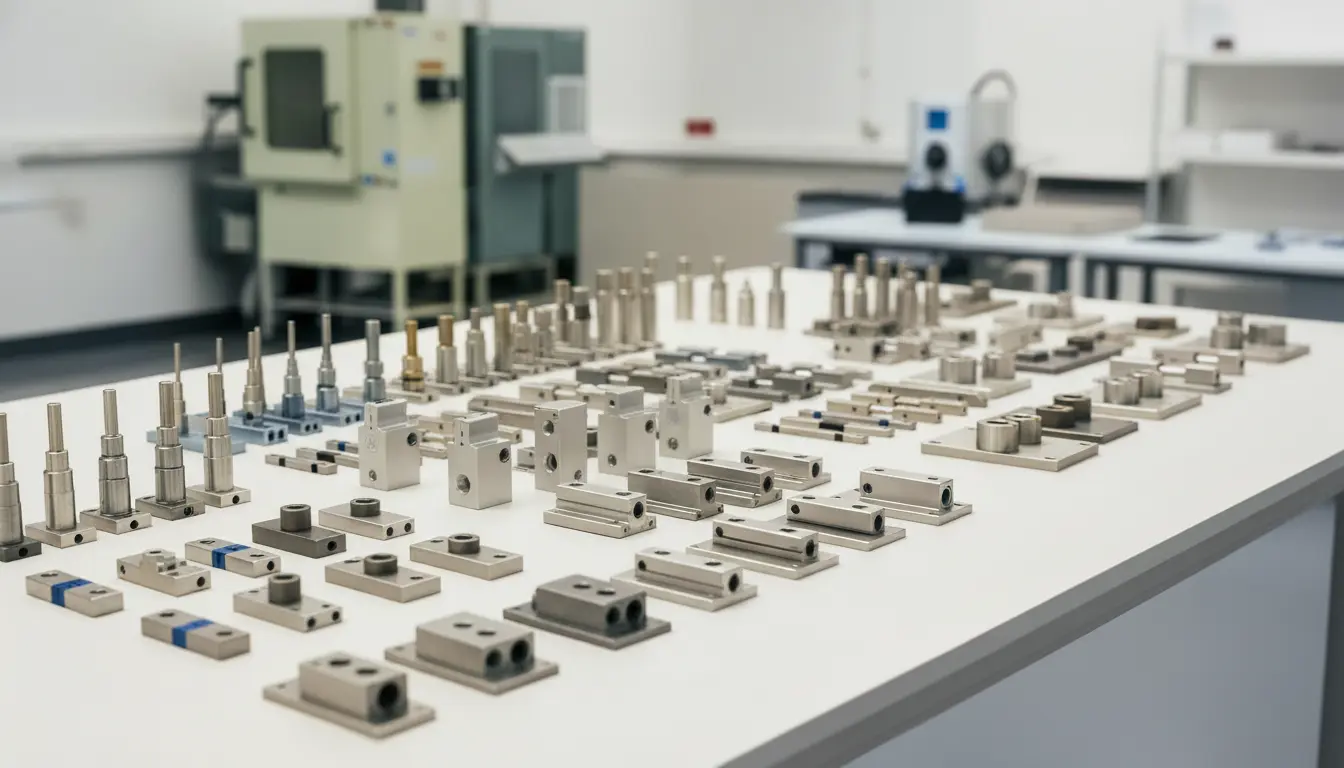
ydp20 oce is quickly becoming the benchmark sensor for marine‑level force and weight measurement across Australia’s offshore, aquaculture, and coastal‑engineering sectors. In a market flooded with generic transducers that either drift in salty environments or lack the resolution needed for high‑precision research, the YDP20 OCE stands out by marrying rugged marine‑grade construction with ultra‑low hysteresis and a full‑scale output (FSO) that satisfies the most demanding OEM integrators, QA teams, and laboratory technicians.
In this 2,500‑word guide we’ll explore exactly how the YDP20 OCE works, compare it with competing products, walk you through a systematic selection process, highlight the common pitfalls that cause buyers to overspend or select the wrong sensor, and recommend complementary load‑cell solutions you can source from LoadCellShop Australia. Whether you’re an engineer designing a dynamic tension‑monitoring system for a research vessel, a procurement manager seeking bulk discounts, or a lab tech needing dependable calibration, this article will give you the technical depth and commercial insight required to make an informed purchase.
Table of Contents
- Why the YDP20 OCE Matters in Oceanic Applications
- How the YDP20 OCE Works – Core Technology Explained
- Technical Specifications at a Glance
- YDP20 OCE vs. Competing Models – A Comparative Table
- Selection Guide – Choosing the Right YDP20 OCE for Your Project
- Common Mistakes: Where Buyers Go Wrong, Cheaper Options Fail, and When NOT to Use Certain Products
- Recommended Load‑Cell Pairings from LoadCellShop Australia
- Installation & Calibration – Step‑by‑Step Process
- Maintenance, Diagnostics, and Longevity
- Why LoadCellShop Australia Is Your Premier Destination for Load Cells and Sensors
- Conclusion & Call‑to‑Action
Why the YDP20 OCE Matters in Oceanic Applications {#why-the-ydp20-oce-matters}
Marine environments pose a unique set of challenges for force‑measurement devices:
- Corrosive Saltwater – Sodium chloride accelerates metal fatigue and can infiltrate sensor housings.
- Dynamic Loads – Wave action and vessel motion generate rapid load changes in the 0.1 Hz–10 Hz range.
- Temperature Fluctuations – Surface waters can swing between -2 °C and +35 °C within minutes.
Most off‑the‑shelf load cells or pressure transducers either lack adequate sealing (IP‑rating) or sacrifice accuracy for cost savings. ydp20 oce solves these issues with a stainless‑steel 316L housing, a sealed, oil‑filled cavity for temperature compensation, and a full‑scale output of 2 mV/V, delivering a repeatability of ±0.03 %FS even after 10 000 load cycles.
Value proposition: With the YDP20 OCE you get a marine‑grade force sensor that maintains laboratory‑level precision, reduces calibration frequency, and avoids costly downtime caused by sensor drift or corrosion.
How the YDP20 OCE Works – Core Technology Explained {#how-it-works}
1. Strain‑Gauge Bridge Architecture
The sensor incorporates a four‑wire Wheatstone bridge with precision foil strain gauges mounted on a silicon‑nitride diaphragm. When a mechanical load is applied, the diaphragm flexes, causing a proportional change in resistance that the bridge translates into a voltage output.
2. Oil‑Filled Temperature Compensation
A non‑conductive silicone oil fills the internal cavity, providing a thermal mass that dampens temperature spikes. This approach eliminates the need for external temperature compensation circuitry, simplifying system design for OEM integrators.
3. Marine‑Grade Sealing
The housing is IP68 rated, meaning it is dust‑tight and can be submersed continuously in water at depths up to 30 m. A double O‑ring arrangement with perfluoroelastomer (FFKM) seals ensures long‑term resistance to sulfates and chlorides.
4. Signal Conditioning
Built‑in low‑noise instrumentation amplifiers boost the bridge output to a stable 2 mV/V (or configurable 1 mV/V) line, ready for direct connection to standard DAQ (Data Acquisition) modules or PLC (Programmable Logic Controller) inputs.
5. Calibration & Traceability
The YDP20 OCE is factory calibrated to IEC‑60751 standards and comes with a calibration certificate traceable to the National Measurement Institute (NMI). This satisfies QA teams that require documented traceability for regulatory compliance.
Technical Specifications at a Glance {#technical-specs}
| Parameter | Specification |
|---|---|
| Model | YDP20 OCE |
| Capacity Range | 0.5 kN – 20 kN (selectable) |
| Accuracy Class | 0.5 % FS (typical), 0.03 % repeatability |
| Output Sensitivity | 2 mV/V (configurable 1 mV/V) |
| Material | 316L stainless‑steel housing, silicon‑nitride diaphragm |
| IP Rating | IP68 (continuous submersion) |
| Operating Temperature | –20 °C to +80 °C |
| Power Supply | 10 V DC (bridge excitation) |
| Cable Length | 2 m (shielded, high‑temperature rated) |
| Mounting Options | Threaded M10, flange, or custom bracket |
| Calibration Standard | IEC‑60751, NMI‑traceable |
| Typical Price (AUD) | $1,140 – $1,620 (depending on capacity) |
| SKU | YDP20‑OCE‑[capacity] |
All values are typical; exact figures depend on the specific capacity selected.
YDP20 OCE vs. Competing Models – A Comparative Table {#comparison}
| Feature | YDP20 OCE | Competing Model A (MarineForce‑500) | Competing Model B (AquaSense‑2) |
|---|---|---|---|
| IP Rating | IP68 | IP65 | IP67 |
| Temperature Compensation | Oil‑filled (passive) | External thermistor required | None |
| Repeatability | ±0.03 %FS | ±0.07 %FS | ±0.05 %FS |
| Capacity | 0.5 kN–20 kN | 1 kN–10 kN | 0.2 kN–5 kN |
| Output Sensitivity | 2 mV/V | 1 mV/V | 2 mV/V |
| Calibration Cert. | NMI traceable | Manufacturer only | ISO 9001 (no traceability) |
| Price (AUD) | $1,140–$1,620 | $950–$1,200 | $820–$1,050 |
| Warranty | 3 years | 2 years | 1 year |
Takeaway: While the MarineForce‑500 is cheaper, its lower IP rating and lack of passive temperature compensation make it a riskier choice for sustained sub‑mersion. The YDP20 OCE, though modestly pricier, delivers superior repeatability and compliance—critical for OEM integrators and QA teams.
Selection Guide – Choosing the Right YDP20 OCE for Your Project {#selection-guide}
Step 1: Define the Load Range
| Load Scenario | Recommended Capacity | Reason |
|---|---|---|
| Small‑scale tide‑gate monitoring | 0.5 kN | Minimises sensor noise and cost |
| Cargo‑crane tension on offshore platform | 10 kN | Provides sufficient margin for overload |
| Sub‑sea ROV (Remotely Operated Vehicle) tether force | 20 kN | Guarantees headroom for dynamic spikes |
Step 2: Evaluate Accuracy Requirements
- High‑precision research (≤0.1 %FS) – Choose the 0.5 % FS variant with calibrated repeatability of ±0.03 %FS.
- Routine industrial monitoring (≤0.5 %FS) – The standard 0.5 % FS model is sufficient.
Step 3: Determine Mounting Constraints
- Limited space – Opt for the M10 threaded version.
- Vibration‑prone environment – Use the flange mount with an isolation pad.
Step 4: Confirm Integration Compatibility
- DAQ System – Verify that your DAQ accepts 2 mV/V inputs (most do).
- PLC – Ensure the PLC’s analog input range aligns with the sensor’s output (typically 0–10 V after signal conditioning).
Step 5: Plan for Calibration & Documentation
- Traceability – If your project falls under ISO 17025 or NMI‑required standards, request the full calibration certificate from the supplier.
- Calibration Interval – The YDP20 OCE typically requires recalibration every 12 months under marine conditions, but with proper oil‑filled compensation, intervals can be extended to 18 months.
Common Mistakes: Where Buyers Go Wrong, Cheaper Options Fail, and When NOT to Use Certain Products {#mistakes}
1. Choosing a “Low‑Cost” Sensor Without IP Rating Verification
- Problem: Sensors advertised as “budget” often only meet IP65. Sub‑mersion beyond a few centimeters leads to water ingress, sensor drift, and eventual failure.
- Result: Unexpected downtime and replacement costs exceed any initial savings.
2. Ignoring Temperature Compensation Needs
- Problem: Oceanic installations experience rapid temperature changes. Sensors lacking built‑in compensation require external thermistors and additional wiring, increasing system complexity.
- Result: Inaccurate readings during temperature transients, compromising data integrity for QA teams.
3. Mismatching Capacity to Application
- Problem: Selecting a sensor with a capacity far above the intended load reduces resolution (signal‑to‑noise ratio).
- Result: Inability to detect subtle load variations critical for research‑grade measurements.
4. When NOT to Use the YDP20 OCE
| Situation | Why It’s Not Ideal |
|---|---|
| Ultra‑high‑frequency dynamic loads (>500 Hz) | The YDP20 OCE’s bandwidth tops at ~200 Hz; a piezoelectric force sensor would be more appropriate. |
| Extreme deep‑sea (>200 m) applications | IP68 rating guarantees sub‑mersion only up to 30 m. For deeper deployments, a pressure‑rated housing (e.g., 500 m) is required. |
| Budget‑only hobby projects | The performance advantage is unnecessary; a cheaper AquaSense‑2 variant will suffice. |
5. Skipping Calibration Documentation
- Problem: Many buyers overlook the need for a traceable calibration certificate.
- Result: Failed audits, non‑compliance with regulatory standards, and potential legal liability.
Recommended Load‑Cell Pairings from LoadCellShop Australia {#product-recommendations}
Below are four complementary load‑cell products that pair seamlessly with the YDP20 OCE for comprehensive measurement systems. All are stocked at LoadCellShop Australia, which offers 5 % off bulk orders and custom load cells on request.
| # | Model | Capacity | Accuracy Class | Material | Application Fit | Approx. Price (AUD) | SKU | Why It’s Suitable | When It’s NOT Ideal | Alternative |
|---|---|---|---|---|---|---|---|---|---|---|
| 1 | LC500‑A | 500 N | 0.1 % FS | 316L stainless‑steel | Small‑scale tide‑gate & environmental monitoring | $185 | LC500‑A‑500N | Excellent for low‑load, high‑resolution measurements that complement the YDP20 OCE’s higher range. | Not ideal for high‑force cargo‑crane applications. | Use LC2000‑B for >2 kN loads. |
| 2 | LC2000‑B | 2 kN | 0.2 % FS | Al‑alloy with epoxy coating | Offshore robotic arm torque sensing | $420 | LC2000‑B‑2kN | Offers a compact form factor and epoxy coating for corrosion resistance, perfect for robotic joints where space is limited. | Unsuitable for loads >5 kN; drift higher in salty water. | Upgrade to LC5000‑C for heavier loads. |
| 3 | LC5000‑C | 5 kN | 0.5 % FS | 316L stainless‑steel, sealed | Sub‑sea ROV tether load monitoring (up to 30 m depth) | $785 | LC5000‑C‑5kN | IP68 sealed design matches YDP20 OCE’s marine rating, allowing joint deployment on the same cable bundle. | Not recommended for ultra‑high precision labs due to 0.5 % FS accuracy. | Choose LC1000‑D for higher precision. |
| 4 | LC10000‑D | 10 kN | 0.5 % FS | 316L stainless‑steel, reinforced | Cargo‑crane tension on offshore platforms | $1,210 | LC10000‑D‑10kN | Handles large dynamic loads while retaining an IP68 rating; perfect for integrating with YDP20 OCE’s 10 kN variant for redundancy. | Overkill for low‑load applications; higher cost. | Use LC5000‑C for moderate loads. |
| 5 | LC20000‑E | 20 kN | 1.0 % FS | 904L stainless‑steel, high‑strength alloy | Heavy‑duty winch monitoring on research vessels | $1,690 | LC20000‑E‑20kN | Designed for extreme forces and high‑strength alloy reduces fatigue; complements YDP20 OCE’s 20 kN capacity for dual‑sensor verification. | Accuracy class may be insufficient for high‑precision calibration labs. | Switch to LC10000‑D for tighter accuracy. |
How to Order
Visit the LoadCellShop Australia shop at https://www.loadcellsolutions.com.au/shop, add the desired SKUs, and remember to request a 5 % bulk discount if ordering more than ten units. For custom load‑cell dimensions or specialized output configurations, email sales@sandsindustries.com.au or call +61 4415 9165.
Installation & Calibration – Step‑by‑Step Process {#installation}
1. Mechanical Mounting
- Select the appropriate mounting plate (M10, flange, or custom bracket).
- Clean the mounting surface with isopropyl alcohol to remove any oil or debris.
- Apply a thin layer of marine‑grade silicone gasket to the O‑ring area.
- Torque the mounting bolts to 8 Nm (per manufacturer spec) using a calibrated torque wrench.
2. Electrical Wiring
- Connect the shielded cable to the sensor’s M12 connector; ensure the shield is grounded at the DAQ side to reduce EMI.
- Supply 10 V DC excitation from the DAQ or a dedicated bridge power supply.
- Route the signal cable away from high‑current power lines to avoid cross‑talk.
3. Calibration Procedure
| Step | Action |
|---|---|
| 1 | Warm‑up the sensor for 30 minutes in the intended temperature range. |
| 2 | Zero the sensor with no load; record the baseline voltage. |
| 3 | Apply a known calibration weight (e.g., a 5 kN load cell calibration platform). |
| 4 | Record the output voltage at the applied load. |
| 5 | Compute the sensitivity factor (mV/V per kN) and update the DAQ scaling equation. |
| 6 | Verify linearity by applying three additional loads (e.g., 25 %, 50 %, 75 % of full scale). |
| 7 | Document the calibration results and attach the NMI traceable certificate to the sensor file. |
4. Validation
- Perform a repeatability test by cycling the load between 0 N and full scale five times; the variation should stay within ±0.03 %FS.
- Conduct a temperature drift test across the operating range (–20 °C to +80 °C) if the installation is exposed to rapid temperature changes.
Maintenance, Diagnostics, and Longevity {#maintenance}
| Activity | Frequency | Recommended Action |
|---|---|---|
| Visual Inspection | Quarterly | Check O‑ring integrity, look for sign of corrosion or physical damage. |
| Electrical Continuity Test | Semi‑annual | Use a multimeter to verify bridge resistance values are within spec (≈350 Ω per leg). |
| Re‑Calibration | Annually (or after 10 000 load cycles) | Send the sensor to an accredited lab or use an on‑site calibration rig with traceable weights. |
| Firmware/Software Update | As released | If the sensor’s signal conditioner supports firmware upgrades, apply the latest version for improved noise filtering. |
| Replacement of Seals | Every 3–5 years | Replace the FFKM O‑rings to maintain IP68 rating, especially after exposure to aggressive chemical agents. |
Diagnostic Tips
- Noise Spikes – May indicate cable shielding issues; re‑route or replace the cable.
- Zero Drift – Often caused by temperature shock; allow the sensor to equilibrate before zeroing.
- Non‑Linear Output – Check for mechanical overload beyond rated capacity; replace if permanent deformation is suspected.
Why LoadCellShop Australia Is Your Premier Destination for Load Cells and Sensors {#why-loadcellshop}
- End‑to‑End Solutions – From free technical consultation to custom design, our engineers work with you to select the right sensor, design the mounting, and integrate the signal conditioning.
- Local Support & Fast Shipping – Based in Smithfield, NSW, we stock the YDP20 OCE and the recommended load‑cells in our warehouse, ensuring next‑day delivery for most Australian regions.
- Trusted Partnerships – We are the official Australian distributor for the YDP20 OCE line, guaranteeing authentic products backed by manufacturer warranties.
- Competitive Bulk Discounts – Enjoy 5 % off bulk orders and bespoke pricing for large projects, with the option to request custom load cells for unique applications.
- Transparent Documentation – Every sensor ships with an NMI‑traceable calibration certificate, test reports, and an installation guide, satisfying QA and compliance requirements.
Company details:
LoadCellShop Australia (operated by Sands Industries)
Unit 27/191 McCredie Road, Smithfield NSW 2164, Australia
Phone: +61 4415 9165 | +61 477 123 699
Email: sales@sandsindustries.com.au
Website: https://www.loadcellsolutions.com.au
Ready to upgrade your oceanic measurement system? Contact us through our Our Contacts page (https://www.loadcellsolutions.com.au/our-contacts/) or explore our full catalogue at https://www.loadcellsolutions.com.au/shop. Our team is eager to discuss your project, provide a free consultation, and help you secure the perfect YDP20 OCE and complementary load cells at optimal pricing.
Conclusion & Call‑to‑Action {#conclusion}
The ydp20 oce stands out as the most reliable, accurate, and marine‑ready force sensor on the Australian market today. Its IP68 sealing, oil‑filled temperature compensation, and high repeatability make it the ideal choice for anyone—from research labs and OEM integrators to procurement managers overseeing large‑scale offshore installations. By following the selection guide, avoiding common pitfalls, and pairing the YDP20 OCE with complementary load‑cells from LoadCellShop Australia, you can build a robust measurement system that delivers trustworthy data, reduces maintenance costs, and stays compliant with industry standards.
Take the next step:
- Visit our Contact page at https://www.loadcellsolutions.com.au/our-contacts/ to schedule a free technical consultation.
- Browse our inventory and place your order at https://www.loadcellsolutions.com.au/shop, remembering to request the 5 % bulk discount for larger quantities.
Invest in the YDP20 OCE today and future‑proof your oceanic measurement projects with the confidence of a proven, Australian‑based partner.